
 Spotify
  Pandora
  Apple
Apple  YouTube
  iHeartRadio
 Solve Your Staffing Crisis: How Adult Day Services Let You Serve 50 Clients with Just 8 Staff
You're all worried about the skyrocketing demand for home ...
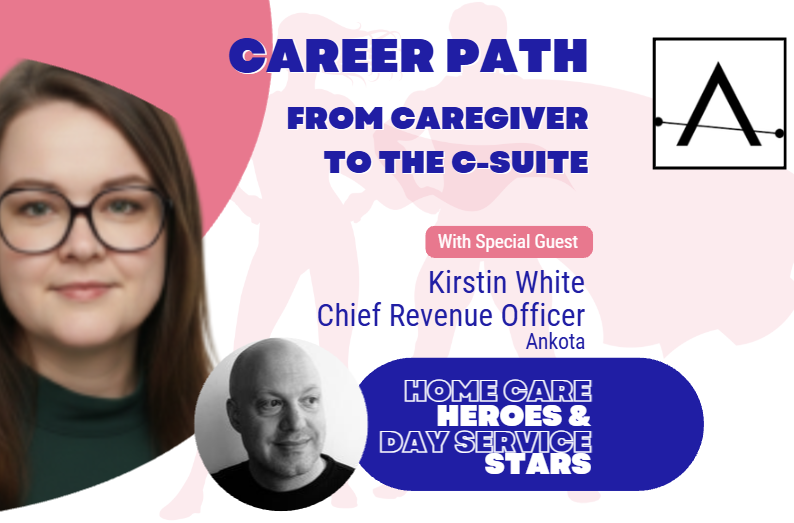
Too many people think of caregiving as the bottom rung of the ladder. Kirstin White calls it the foundation of the entire industry, and her career proves the point.
In this episode, host Ken Accardi talks with Kirstin, who went from caregiver to scheduler and operations manager at a home care agency. She then joined Ankota, where she worked in customer support, account management, and sales, and she is now Chief Revenue Officer. Kirstin talks about the client who shaped how she sees caregiving, the skills that got her noticed, and what she did as a manager to keep new caregivers from quitting after their first shift.
She also speaks directly to caregivers who feel stuck. She covers what to show your agency if you want to move up, and she invites you to reach out to her.
Key Topics Covered:

Links & Resources:
Home Care Heroes and Day Service Stars is produced and sponsored by Ankota - If you provide services that enable older or disabled people to continue living at home, Ankota can provide you the software to successfully run your agency. Visit us at https://www.ankota.com
From Caregiver to Top Management: Making Caregiving the Start of a Career
Host: Ken Accardi
Guest: Kirstin White
Show: Home Care Heroes and Day Service Stars Podcast
Introductory Narrator 1: Kirstin White started her career as a caregiver, and now she is in top management of a company. In this episode of the podcast, we're going to talk about how caregiving can be the start of a career and not just a job. Enjoy.
Introductory Narrator 2: Welcome to the Home Care Heroes and Day Service Stars podcast. If you provide services to keep older or disabled people living at home, then this podcast is for you. Now, here's your host, Ken Accardi.
Ken Accardi: Well, hi, and welcome to a new episode of Home Care Heroes and Day Service Stars. I am very excited about today's guest, who is Kirstin White. And Kirstin, actually, is somebody I had the chance to meet early in their career when they were working at a home care agency, and now they're working here at Ankota with us. And I thought the great story to tell about Kirstin was that, you know, she's somebody who started as a caregiver and moved up to positions of increasing responsibilities in her home care agency, and then she came over to our company and provided technical support, and now she's even our Chief Revenue Officer. So she's leading sales and, you know, doing so many things in account management. So, with that, welcome Kirstin. Welcome to Home Care Heroes and Day Service Stars.
Kirstin White: Hello.
Ken Accardi: It's great to have you. Let's start at the beginning of your career as a caregiver, and, you know, we were just talking about this, and interestingly I learned some things, cuz I didn't know that much about your time as a caregiver. But, I guess, as a first question, you know, I know that you were in the field and doing caregiving for a number of years. Did you have any clients where that relationship just really stood out for you, and, you know, any stories you could tell about that?
Kirstin White: Yeah, absolutely. So, I think one of the - one of the main patients that always come back to me, she was my first hospice patient, and we did 24-hour care with her. There were three of us girls who cared for her during her three and a half months of care before she passed away. There were times where the other caregiver was having a hard time - she thought that maybe she was passing - so I would go, an hour drive from my home just to go over there and be with Evelyn, and also with the caregiver, just to be a helping hand. And I actually was blessed to be able to be there for her last moments, and there's so much I took away from her, whether it be life lessons, like she told me to never wear flip-flops because when you're 80 years old, your soles will really feel that. So there's just tiny moments that I always remember her, and still to this day, I go and put flowers on her grave on her birthday. So it was just a really, really cool experience that will stay with me for the rest of my life.
Ken Accardi: Yeah, so it sounds like, I mean, you met her, you know, near the end of her life, and it sounds like she was very mentally sharp, and she was able to impart those life lessons. And, yeah, any other little life lessons or stories that you remember from her?
Kirstin White: Always leave a kitchen light on in the evening when you have young kiddos at home, whether it be the light over the sink or the light on the microwave. And actually, I do do that. It just helps the little kiddos walk into the kitchen and kind of know that they're home, but also it's not dark in there. The kitchen is one of the things that families either gather around, and we have really good memories. So, still to this day, I leave a small light on in the kitchen in the evenings.
Ken Accardi: That's a great story. So, I know that you also told me that they were - you know, and I don't know the situation behind it and what led to this in scheduling - but that there were some times where you worked some pretty crazy long shifts and then, you know, had not a whole lot of time in between and that sort of thing. So, you know, I think that the toughness of, you know, how hard it could be on your body - I mean, both physically and emotionally - could really take its toll. And, yeah, I mean, tell us a little bit more about that, because I know that you mentioned that earlier.
Kirstin White: Yeah. So the agency that I worked for when I was caregiving, we had three field offices: Springfield, Belleville, and Quincy. A lot of the times our 24-hour private-pay clients were located in Quincy, and there weren't a lot of caregivers with availability to be able to cover short-notice call-offs, or even people that may have been an hour out of the city. So I would find myself covering those shifts for overnight, and then on the way back to Springfield, I would probably stop at an exit off the interstate and maybe get a couple of hours of sleep, and then I would head into my normal 8 hours a day with my normal clients. So it can be very, very tiring, and a lot of it comes with leadership. If you have that manager in that office who, you know, gives you incentives and appreciates the work that you do as a caregiver, I believe it really pushes those caregivers to go outside of the scope and work long hours just to make sure patients are cared for.
Ken Accardi: Yeah, no, I hear that. And I think that one of the things that we all need to be more mindful of is providing career paths for caregiving jobs. But I guess, like, in some of the best situations I've been, like, for example, at a conference where, like, the Caregiver of the Year is telling their story, or there's a panel of those caregivers and you just hear, you know, what they've gone through. I mean, some of the folks are - they're older, and they just caregiving is their thing. I mean, they just want to be, you know, doing that one-on-one care for a really long time. And, you know, and certainly in those cases, they stand out, and I'm sure the clients are asking for them, and they're going to see their pay increase and things like that. But, you know, in your case, I mean, you've progressed pretty far, and I guess that, you know, you knew you didn't want to be in the caregiving job in the field forever. And so I guess if, let's say that there's some caregiver listening to this and they are, you know, feeling stuck. They're like, "You know, I really do want to progress, but I don't know how to make my agency aware that I'm interested in that," or, you know, like, what are your thoughts on that?
Kirstin White: Yeah, absolutely. So I'm a really big promoter of working up the ladder. How I've learned it for almost 10 years now is people should probably stop thinking about caregivers being at the bottom of the ladder, and more recognizing it as it's a foundation of an entire industry. The words that I'd like to give to caregivers that want to move up the ladder is: you have to have great communication, time management, problem solving, crisis management, and able to make decisions under pressure, and definitely working independently and understanding the client and family needs. And documentation - documentation is one of the biggest things in caregiving, and also if you want to move up the ladder. Documenting every single thing like you're going to be in court one day is what I tell people, because you always want to make sure you have that documentation.
Ken Accardi: Yeah, fantastic. So, I guess, you know, in our software, which we both know very well, that when you put in your care plan for a client, I would say a lot of agencies, they just put the task. You know, they're like, "Okay, it's going to be, you know, dressing and grooming, and it's going to be prepare meals, and, you know, and help with the bath," and that sort of thing. And, you know, one thing that I've seen in - that I would say differentiates the agencies that are more advanced, let's say, is that when they put those care plans in, that they really do know and want to share with their caregivers, especially if there's, like, different caregivers - some more junior, some more senior - coming throughout the day. They're putting in, you know, really not just what is the task that needs to be done, but how does that person like the task to be done, right? So I see in some of our customers, they put, you know, just as far as the bath, it's like, "Okay, well, you know, start the shower, observe by the hall," or they'll say, you know, "likes these bubbles," or "set up this step," and all that type of thing. And I guess in some agencies that are maybe bigger and more advanced, they have care coordinators who are going out and maybe meeting the client the first time and gathering all that information. But, you know, I get the impression that you just jumped in, and you just had it naturally as a skillset. So my question in all this is, you know, how, as a caregiver going into a home of, you know, someone that you're just meeting, you know, without sort of invading their personal space and things like that, how do you, you know, kind of build that rapport with them and really find out not only, you know, what's on your care plan task list, but, you know, how they want their care?
Kirstin White: Right. I think a lot of caregivers have to remember that you're walking into a client's home - that's their private space - and they don't like to be told what to do. So whenever I walked into a home that I had never been in before, I kind of just observed. And a lot of my patients, they liked to do things on their own, but they like someone just to be there to be sure they didn't fall, or things like that. I think it's very important that you still have to give that client their space, their personal space. And a lot of the times, trust me, there were some clients that they were hard. They would hit, they would kick, they would not be very nice, they would not say nice things, but you can't take it personally. It would hurt, you know, their feelings as a caregiver, but you just have to kind of let it go in one ear, out the other, because you're there to make sure they're safe. A lot of the times, I would just sit down, and I would ask them simply how their day was. And then as soon as that conversation started, it would usually be like a faucet full of what they like, what they did that day. So it's just a matter of treating them as a human, kind of just like your grandma would, so, yeah.
Ken Accardi: Yeah, no, that's fantastic. I mean, this is, like, a story you remind me of, but it's kind of apropos, is that early in my career, I worked a lot in France. I worked for GE Healthcare and went to France, and I didn't speak very much French at all. But somebody told me, you know, when you - people say that French people are rude to Americans, and - but it's really because, you know, the Americans are kind of rude to them first, maybe without realizing it. And somebody said, you know, if you could learn how to say, like when you walk into a shop, you know, you just say, you know, "Bonjour, Monsieur," or "Bonjour, Madame," then - and I learned like this big, you know, sentence where I could say, you know, "Mon français n'est pas très bien," which means my French isn't very good. And like I would say every single time, you know, I would open up that way, they would always say, "Oh, Monsieur, your French is so good! I will practice your French with you," right? And I think that you're right, I mean, just kind of making that effort is - I mean, it's really interesting. It's like, you know, you say you just ask about their day, and within not that much time, you know, they're your friend and you're, you know, you're not just somebody there. I know, like, when my Aunt Myrna, you know, like toward the end of her life, she had caregivers in the house, and, you know, like, every time I was there, they were just sitting there watching TV, and, you know, and she was in Queens, New York, and I think there was a little language barrier. You know, it was like mostly - most of her caregivers were Chinese, and, you know, I don't know, I mean, I could just tell there was no relationship there, and, you know, they were there to certainly feed her lunch, and, you know, and make sure that, you know, she got help going up or down the steps and things like that. But it's definitely not anything like what you're describing here, and that's great. But, you know, kind of going back, I mean, you mentioned so many things that, you know, ways that you sort of show your agency, you know, what you're capable of. And, you know, a lot of it is, like you said, I mean, the documentation. Wasn't sure how it made me feel when you said, you know, it's like document as if you're going to be in a court case or whatever; hopefully we're not going to end up there, but I think that if we think about it from the perspective of if we really want, let's say, the agency and the family to know how that person's doing and that sort of thing, the more documentation you provide is better. But I love that, and then you talked about, you know, communication being key, also, you know, that you could manage time, right? So caregivers who don't show up, or if, you know, like, I mean, the call out with no call, or like, you know, no show with no call is like, you know, the biggest that we never want to happen in our agencies and things like that. And then you also talked about, you know, being able to act independently and, you know, and deal with a crisis, right? And I guess, you know, one compliment to you I'll give you is, you know, every once in a while, I mean, here we are in our much easier job of, you know, being in a software company, but I will admit sometimes we get punched in the face, right, you know? It's like people are not happy with us, and something happens or we think we really, you know, did a great job on that demo, we don't get the deal. So I definitely see that in the face of pressure, that you're just really, really great. And I also, you know, like, kind of our philosophy is if there's a situation in a home care agency where they're providing care to people, you know, from their heart, and they're having trouble paying their bill to us, you know, where you - we always will find a way to, you know, kind of help them out. And, you know, so I think that you, just as a compliment, do a great job of, you know, having that resilience, but also the compassion, and that's great, and, yeah, a compliment to you. I guess, shifting gears a little bit, when you moved from, you know, being a caregiver, I mean, then you did progress and you were, I guess, a caregiver wrangler, right? You were there doing the scheduling and all that type of thing. So, I guess, like, what did you bring from the caregiving role into the, let's say, office manager and scheduler job that made you better at office management and scheduling?
Kirstin White: So, I think the biggest part is I knew the pain points of being a caregiver. I knew the importance of availability when it comes to scheduling. When I moved into the scheduling position, it was like cakewalk, basically. It was really easy, because the job description is: you have to be available based upon your availability. So, a lot of the times, I would find that perfect caregiver to match with the client. They would take their schedule, and then maybe they would float over to a different client and work 8 hours a day. So, I had about 56 caregivers who were getting full-time hours, and it was just easy for me because I kind of knew where caregivers needed breaks, I knew what their schedule was, what their availability was, and I always treated the caregivers like family. I knew when their child had a birthday, so I made sure, "Okay, we're not going to schedule on that day." It really just is one big family if you want a company to flow the way it should and make sure that those clients in the field have their care.
Ken Accardi: Thank you for sharing that. It's really key, and I guess knowing what it's like. And I guess with, you know, 56 people, I mean, probably not every scheduler out there is able to, you know, kind of keep that all in their head, and I know that, you know, well, I will say that in technology and our software, of course, that we've made it a whole lot easier to track availability and, you know, some of the things that we're working on and that the, you know, let's say, some of these leading add-on AI-assisted scheduling things are doing is that they're checking in with the caregivers on, you know, "Hey, has your schedule changed, right?" So somebody's like, "Oh yeah, you know, I did say that I was available these times, because, you know, that's what my classes were last semester, and now my classes are this this semester," or "my family obligations," or, you know, "when my kids go to school," and things like that. So, I mean, would you say that back in your day of doing that, which, I guess you've been with us for a while now, so it was a while back, that it was mostly in your head, or that, you know, like, did you find that the software was kind of handling it for you?
Kirstin White: It was kind of both. I kind of knew the new hires, their availability pretty quickly. I would go back in the books and look. A lot of it would be in the system. If I would plug a client into the schedule, it would show what the availability was for the caregivers, so it was a mix of both. But it's so much easier when a software, like Ankota, has it all plugged in there for the availability; it runs so smooth.
Ken Accardi: Yeah, for sure. Well, thank you for the little Ankota plug in there, too, so that would never hurt. You know, another, I guess, big issue just since we're focusing on that earlier part of your career is that a lot of folks that get into caregiving because it's, you know, it's all about, "I need to find something to do, right, and make enough money that I could, you know, keep my apartment and lead my life and that sort of thing." So if you look at evolution of wages for caregivers, you know, sometimes it might be, "Well, you know, am I going to do this caregiving job, am I going to work in the Amazon warehouse, am I going to work in, you know, Walmart or something like that?" And I guess that one thing that does happen is that, you know, people do find that caregiving companies need a lot of caregivers, right? There's a lot of shifts to fill, there's a lot of demand. You know, one of the biggest issues in the industry is retention, and we talk a lot about, you know, kind of 90-day retention and things like that. But what you even see is that, you know, there's these situations where, you know, caregiver, they come in and they're all excited and they're picturing, you know, like Betty White or something like that as their, you know, like this grandmotherly like figure who's dressed to the nines and, you know, and all that kind of thing. And then they go through some training, and they learn a little bit about, you know, dignity and respect and, you know, CPR and first aid, and then like they go in the home and it's not Betty White, you know, there at 90 years old, but, you know, it is like - I mean, you talked about, you know, not taking it personally, and the clients are maybe not all that nice to you and things like that. You know, maybe that house isn't, you know, hasn't been maintained to the standard that it did back in its heyday, and it doesn't smell like roses and things like that. So I think there is a lot of, you know, that kind of a concern going in. And I know that, you know, you worked in agency that did the combination of both private pay and Medicaid, and, you know, having sort of neighboring communities more affluent, less affluent, and that sort of thing. But I guess in all this, my question is, you know, as kind of the front line, I mean the person that the caregivers are talking to in the company, you know, before we even had things like our caregiver awards and things like that, you know, did you kind of do things to sort of help with those, you know, getting through those first shifts, and that kind of thing, and any stories you could tell there?
Kirstin White: I think, you know, the whole industry knows that there's a big turnover rate for caregiving. It's not meant for everyone. But when we do get those gems, as I would call them, that would last, you know, years. But when I was an operations manager, I would have in-services with our caregivers every 3 months. I would always make sure also that we would have a Christmas party, we had Thanksgiving parties, and at our in-services, I always took that time to give awards out to the workers who stood out to me in those 3 months. We also went through training to make sure that all the training was up-to-date. We would also go through app training, because some of the older generation, they still had flip phones at the time, so they weren't too hip on app training. So I would always make sure we would have time to do that. And also, when they first started, I would actually attend their first client visit to introduce them to the client, make sure it was a good fit, and then our care coordinator, who was an LPN, she would pop in the first 3 weeks - so once a week visits, 3 weeks - to make sure everything was running okay, and then, of course, if any issues happened or they didn't feel comfortable, they would call me. But I always wanted to make sure they felt supported, because a lot of people are scared to walk into their first client's home because they don't know what to expect. So that's why I always wanted to be present at their first visit just to make sure that my client and also my caregiver felt supported and introduced correctly.
Ken Accardi: Yeah, fantastic. Yeah, that's definitely best practice. And it's interesting that you had, you know, your care coordinator was more of an LPN skill, as opposed to more of a, you know, kind of senior caregiver skill, but it sounds like between you and the LPN, you were able to find a really good balance between. All right, perfect. So, you know, we keep dwelling on your past, but we're going to continue doing that. So you did actually join Ankota, and you joined us in customer support. And I guess that, you know, different job, different sorts of things, but I think that, you know, you and we also have another - I mean, we have a great team in Ankota; I love everybody that we work with, but, you know, you and this other team member of ours, Francene, both came from running front offices at home care agencies, and it's definitely, you know, helped you, you know, kind of get into the groove a lot, you know, faster and provide better service and better support, and all those kinds of things. So I guess what are some of the skills and knowledge that you brought in having, you know, been a caregiver and a care coordinator and an office manager in a home care agency when you came to work in support?
Kirstin White: Yeah. I really enjoyed transitioning over to a software, just because I was able to actually talk to over a hundred admins who ran their front office. They do everything differently, each one of them. I think what really, really helped is that I knew their day-to-day struggles. I knew what they struggled with, I knew what they needed help with, I knew their frustrations, and sometimes a software company is their punching bag when things don't go right on the screen. So it was actually one of my favorite things to do is de-escalate problems when it came to admins working in support for software. I knew about billing issues, I knew about authorizations, EVV issues, or even calling families just because something didn't look right. That was the best thing that transitioned, is just I knew all the problems, I knew how it felt. So it felt great knowing that I could help more than one agency on their day-to-day life.
Ken Accardi: Right, exactly. Yeah, they're probably not calling into support at their favorite moment, right? I mean, it's usually, you know, something isn't right with the authorization that is, you know, keeping that from getting billed and we're coming up on a billing cutoff, or, you know, we had a caregiver call out at the last minute and, you know, and we're trying to do something like that. So, yeah, so I think that, you know, de-escalation skill - I mean, ultimately, you know, I mean they're probably frustrated with the situation, and then, you know, in that situation where there was something that they didn't expect, now they need to get it fixed in the software right away. So I think that, you know, a tough part, there's that little bit of time in there where it's like the venting and the, you know, and the not being happy part, that, you know, the sooner you can move through that and try to get to the root of the issue and, you know, kind of get them situated, I think that's really, really great. And then one thing I again commend you on is that, you know, in that role you said, "You know, hey, you know, why don't we figure out a way that we could call out to folks on a regular basis, right?" And, you know, if they're busy, it won't be a good time, we'll get back to them. But, you know, we always want to be, you know, like here we are sitting in software land, right, where we're like, "Okay, well, we want to have calls with them about, you know, using this new feature we put in there," or, you know, "making things easier for them," or seeing that, you know, "Hey, like it looks like you're doing, you know, too much manual work in your billing. We have the ability for the software to do that for you." And, you know, that's usually not what the calls are about when they're calling in to us, right? So I love the fact that you added that initiative to call out to them and, you know, and take that on. And I think those were, you know, that really kind of ended up, you know, getting to that situation where we could say, "Great! You know, hey, we've wanted to show you these new features that have rolled out," and things like that. So I think being, you know, proactive and reactive, you know, both in the right balance is a good thing. And if I think back to, you know, what you shared about being a caregiver and, you know, trying to send the message, "You know, hey, I think I could do more, and I'd like to do more, and I'd like to," you know, you talked about, well, communicating well, and then, you know, taking on things and doing time management, and, you know, so bringing in an initiative like that, like the outbound, is a big thing. And then, I guess, you know, just sort of helping tell your story, one thing that you did at some point was, you know, we had some customers who weren't, you know, paying their bill on time and things like that. And, you know, you said, "You know, let me fix all that, right?" And literally I'm like, "Hey, if that's something that you want to step in on and help out with, you know, have at it." So that was certainly a lot of initiative that you took to do that. But, you know, if there was somebody who was, let's say, a little bit behind in their payments and things like that, you know, tough situation, but I guess, again, you know, you know what their life is like running their agency. Do you have any stories in that regard?
Kirstin White: Yeah. There may have been a time where a customer was behind three invoices. We didn't really hear from them; they were kind of quiet. All it took was one phone call, and her husband had a heart attack and he'd been in the hospital for a few months. She didn't have the time to reach out; that's not what her focus was on. So, one phone call I gave her, and she said, "Oh, yes, you know, thank you so much for calling me. Let's set up a payment plan." So we got that done the same day, and within 2 months, you know, those three invoices were paid off. So a lot of the times, all it takes is just one friendly phone call to say, "Hey, I'm here to help. What can we do?" And a lot of the times, it's they take that up, because they need the help. So one phone call makes a huge difference.
Ken Accardi: Yeah, for sure. You know, I don't really know how the other software companies do what they do, but I do know that we always try to say, you know, what can we do to, you know, kind of get this client to where they need to go? So to take, you know, an example which happens state by state, especially when you have the Medicaid side, is we've worked with all of our customers, let's say in Missouri, to get them up and running on the electronic visit verification. You know, in Missouri, up until April of this year, it pretty much worked where you sent your electronic visit verification over to Sandata, and, you know, if you're getting 90% of that in, it's great; you know, 88% is fine; and, you know, all of our customers had pretty high percentages and things like that. But then all of a sudden, April 1st, it's like, "Hey, we're changing the system." And the way we change the system is that if we don't have it in Sandata approved, then we're not going to pay you for it. So then, you know, customers go from, "Oh, my god, I used to have 90% EVV, which everybody said was good, and now I'm only getting 90% of my pay." And I know that in a lot of those situations that, you know, companies came over to Ankota because they heard the story. It's like, "You know, well, yeah, I didn't know. You know, I wasn't aware, even though they sent me some memos and things like that." But then when we get in that situation, we're like, "Okay, well, we found out that you're not putting the right service codes on these," and then we would just step in and we'd help them, and with their approval, we'd get all those reason coded and get them out and, you know, and get them paid and get them caught up. But yeah, I think that, uh, I mean it's, you know, horrible that one situation that you came back is that, you know, her husband had a heart attack and that kind of thing. But, yeah, I mean definitely if it's just a case where something else happens in their life, especially if they're a small agency, solo entrepreneur, that kind of thing, and they need that help, I mean, we can usually help them and get them through. Okay, well, listen, I guess time has been flying since we've been, you know, having fun. I guess just, you know, to kind of talk about, I mean, you started in support, you became the leader of support, you added our proactive support, and then you did this account management, and now you've actually stepped in and done sales. And what I'll say is that, you know, your knowledge in being able to understand what it's like in a home care agency, you know, we don't do any high-pressure sales. We just explain how the software works and, you know, and, um, you know, that has really transcended. So, I'm very proud of you; I'm very proud to have you on the team. And I know that Kirstin, if anybody's listening today, you're a caregiver, you're somebody who wants to be a care coordinator, you know, shoot her a note. You could send a note to Kirstin, it's kirstin.white@ankota.com. And, yeah, and if you could use some help with something like that, and Kirstin can help you, I am sure that she'll be getting back to you and, um, see how she could help out. So I don't know, any last thoughts or words for this one, Kirstin?
Kirstin White: Um, I don't think so. I'm just really happy with helping agencies grow, and that's my number one goal is to make life a lot easier with the software when it comes to home care, or FMS, or any kind of industry with home care. So, yes, please reach out to me. I would love to help you grow in your career as a caregiver, or if a field supervisor, scheduler. I'm here to help.
Ken Accardi: Perfect. Thanks, Kirstin, and thanks everybody for attending this session of Home Care Heroes and Day Service Stars. Have a great day.
Kirstin White: Thank you.
Outro Narrator: Thanks for joining us today on the Home Care Heroes and Day Service Stars podcast, produced by Ankota. You can listen to back episodes by visiting 4homecareheroes.com. That's the number four, then the words homecareheroes.com.

Ken is the founder and CEO of Ankota, a company that helps any organization that helps older or disabled people live independently in their home of choice. Having grown up with a disability and a passion for healthcare, this is Ken's mission
![What Every Home Care Leader Should Know About AI! [with Ankota Founder Ken Accardi]](https://www.ankota.com/hubfs/What%20Home%20Care%20Leaders%20need%20to%20know%20about%20AI.png)


Trusted by home care agencies nationwide