
Adult Day Care Activity Ideas to Keep Clients Engaged
Adult day care centers provide a vital service, offering a ...
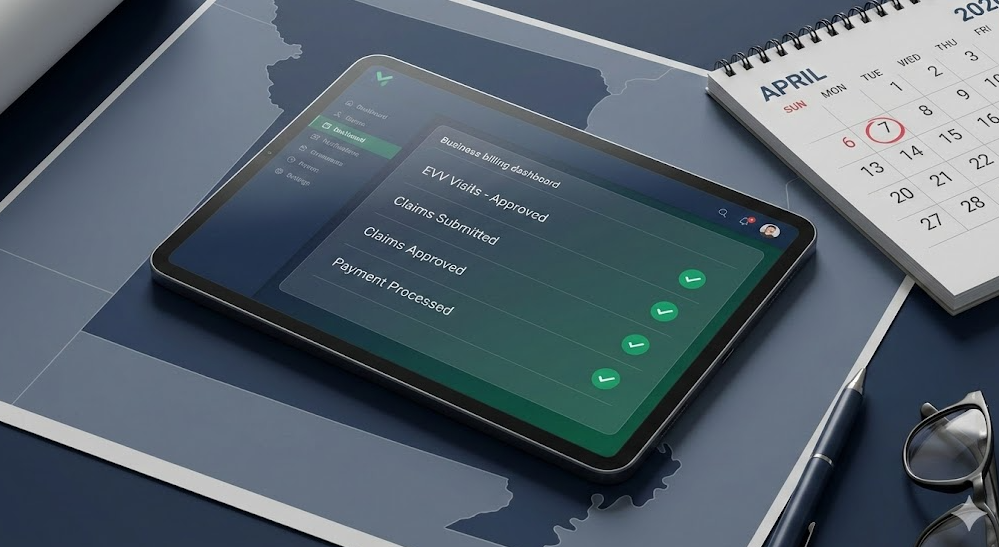
Missouri made four changes to how EMOMED processes home care visits in 2026. Accrued minutes (accumulated minutes) now require caregiver-level attribution — and visits are already being rejected. Starting April 7, any visit that doesn't validate against your aggregator (SanData) won't be paid. Fusion authorizations are now proportional to the number of days in each month. And if you bill CDS and ILW together, the proportional change affects when that mid-shift switchover happens. Below, we break down each change and what it means for your agency.
Missouri doesn't ease into regulatory changes. It drops them, sends a memo, and expects compliance.
If your agency delivers services through EMOMED, four changes took effect at the start of 2026. Each one touches how you bill, how you get paid, and how your electronic visit verification data flows to the state aggregator. With an April 7 enforcement deadline approaching, the window to get these right is narrowing.
Here's what changed and why it matters.
Missouri agencies already know how accrued minutes (also called accumulated minutes) work — you can only bill for completed 15-minute units, and the remaining minutes carry forward until they form an additional billable unit. It's one of the things that makes Missouri EVV different from almost every other state.
What changed: The state now requires clearer caregiver-level attribution when accrued minutes are combined into a billable unit. EMOMED needs to see which caregiver was working when those minutes were earned — not just that the minutes exist.
Why it matters now: Missouri has already begun rejecting visits that don't meet the new format. The state's memo made clear that not all EVV vendors have updated their systems to comply. Agencies are seeing claims flagged that would have gone through without issue last year — and the problem isn't on the agency side. It's a vendor compliance gap.
At Ankota, accrued minutes are submitted automatically with the required caregiver attribution built in. But regardless of which system you're on, the first question to ask your vendor is whether they've updated their accrued minutes format for 2026.
Related reading: 7 Best Practices for Missouri Medicaid Home Care Agencies
This is the change with the hardest deadline.
Missouri can now correlate claims against EVV records in SanData, the state's aggregator. Starting January 7, the state began identifying visits where EVV data is missing, incomplete, or doesn't match the submitted claim. Every visit tied to a DCN (Medicaid ID) is subject to this matching.
The grace period runs through April 7, 2026. After that, visits that cannot be validated in the aggregator will not be paid.
That's not a warning about future policy. It's a countdown.
The most common issues we're seeing across Missouri agencies:
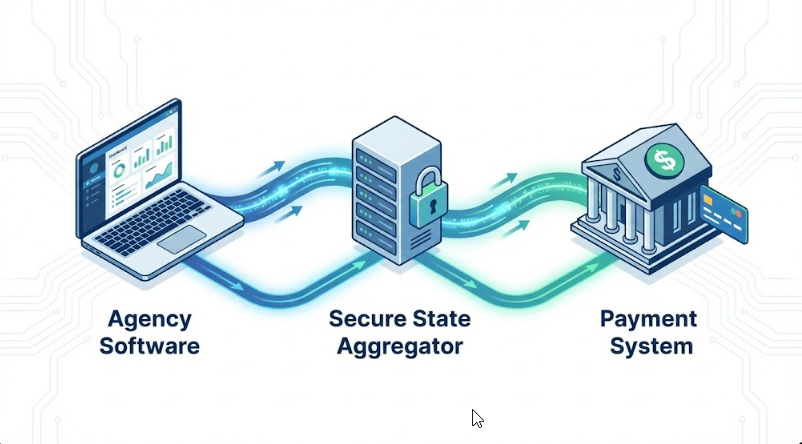
The agencies in the strongest position right now are the ones running daily reconciliation between their EVV system and the aggregator — catching gaps before they become denied claims. If your current system doesn't surface that visibility, you're operating with a blind spot during the worst possible window.
Missouri used to issue Fusion authorizations on what amounted to a fixed monthly basis. An authorization might specify 496 units per month regardless of whether the month had 28 days or 31. Agencies that understood this could use shorter months strategically — the same unit count spread across fewer days meant slightly more capacity per day.
That's over. Fusion now issues authorizations proportional to the number of days in each month. A 31-day month might carry 310 units; a 28-day February carries 280.
The math follows the calendar now.
But smart unit management hasn't gone away. Caregivers still miss shifts. Holidays happen. Clients have days where care isn't delivered. Those unused units can still be reallocated to other days within the same month — if your system supports it.
The real operational question is whether your software lets you plan all 12 months of authorizations at once. At Ankota, you enter the units for each of the 12 months on a single screen and schedule the full year in one pass. If your current setup forces you to re-plan month by month, that's 12 times the work for no additional accuracy.
Related reading: The Coming Caregiver Crisis — and How Technology Can Help
This one isn't a new rule — but the changes above make it newly urgent.
Many Missouri agencies bill Consumer Directed Services (CDS) alongside the Independent Living Waiver (ILW) for the same client. The billing rule is simple in concept: CDS units must be used first, and ILW only kicks in after CDS is exhausted. In practice, CDS authorizations rarely run out at clean shift boundaries. A caregiver might clock in for a six-hour shift with only 90 minutes of CDS remaining. The system needs to bill those first 90 minutes to CDS and the remaining time to ILW — automatically, mid-shift, without the caregiver or the office doing anything.
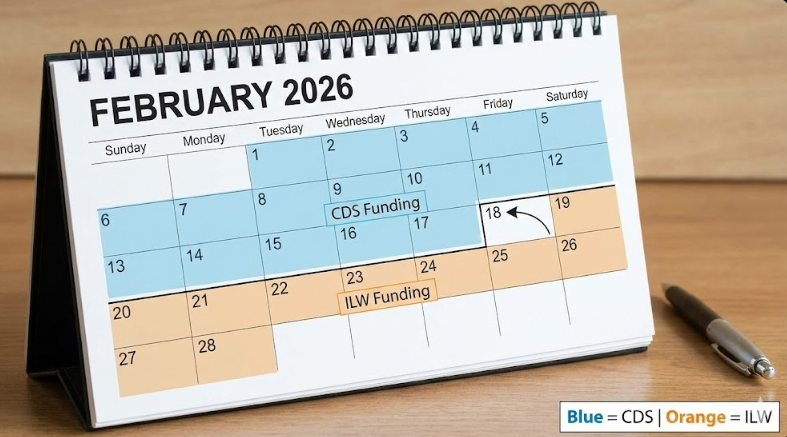
Here's the 2026 connection: Proportional monthly authorizations change when CDS units run out each month. The switchover date shifts. And with aggregator validation now tied to payment, a CDS/ILW mismatch isn't just a billing headache — it can trigger an EVV validation failure and a denied claim.
At Ankota, the CDS-to-ILW transition happens automatically. The system uses CDS units first and shifts to ILW the moment CDS is exhausted — and it applies the correct proportional authorization for the current month. No manual correction. No spreadsheet reconciliation.
If your current system requires you to manage this split by hand, the new proportional model just made that significantly harder.
While these four changes affect different parts of your billing cycle, they all lead to the same bottleneck...
None of these changes exist in isolation. The accrued minutes update, the aggregator enforcement deadline, the proportional Fusion authorizations, and the CDS/ILW complexity all interact. An agency that solves one but ignores the others is still exposed.
Missouri is tightening the connection between service delivery, EVV data integrity, and EMOMED payment. That's not necessarily a bad thing — it just demands that every layer of your operation is aligned.
Three questions worth asking your EVV vendor this week:
If the answers aren't immediate and clear, that's worth knowing before April 7.
Related listening: Adding Adult Day Services to Home Care — Synergy and Margins (Home Care Heroes Podcast)
Related reading: AI in Home Care — What's Actually Working and What's Still Hype
Ankota provides electronic visit verification and home care management software configured specifically for Missouri EMOMED compliance. [Schedule a Missouri EVV review].
My accrued minutes were processing fine last year. Why are they being rejected now?
Missouri updated the recording format for 2026. The new requirement is caregiver-level attribution on accumulated minutes — something the previous format didn't enforce. If your EVV vendor hasn't updated to the new format, visits that would have been accepted in 2025 will be rejected now. The state's memo confirmed that not all vendors have made the change.
What exactly happens on April 7?
The grace period for aggregator validation ends. After April 7, Missouri will deny payment for any visit where the EVV data doesn't match the claim in SanData. The state has been able to run this correlation since January 7 — they've been logging gaps. April 7 is when the financial consequence kicks in.
How do I know if my visits are validating in SanData?
That depends on your EVV system. Some systems provide real-time aggregator reconciliation dashboards. Others don't surface validation status at all. If you can't pull a report today that shows you which visits have been accepted by the aggregator and which haven't, that's a gap worth closing before the deadline.
Do the proportional authorization changes affect every program?
The change applies to Fusion authorizations broadly. Any program where authorizations were previously issued at a flat monthly rate will now see allocations proportional to the number of days in each month. This is especially impactful for agencies managing CDS and ILW together, since the proportional change shifts when CDS units are exhausted.
We manage CDS/ILW splits manually. Is that still viable?
It was always difficult — but the proportional authorization change makes it significantly harder. When CDS unit counts shift every month based on the calendar, predicting the exact day and shift where CDS runs out becomes a moving target. Manual management at that point isn't just inefficient; it's a source of billing errors that could trigger aggregator validation failures under the new model.
We're not sure our vendor has implemented these changes. What should we do?
Ask them directly — the three questions in the section above are a good starting point. If you'd like a second opinion or want to see how Ankota has configured for Missouri 2026, we're happy to do a 20-minute walkthrough
Ankota's mission is to enable the Heroes who keep older and disabled people living at home to focus on care because we take care of the tech. If you need software for home care, EVV, I/DD Services, Self-Direction FMS, Adult Day Care centers, or Caregiver Recruiting, please Contact Ankota.
And if you're ready to see how the most innovative agencies are using AI to empower their caregivers and automate the rest, meet your new companion at www.kota.care.

Ken is the founder and CEO of Ankota, a company that helps any organization that helps older or disabled people live independently in their home of choice. Having grown up with a disability and a passion for healthcare, this is Ken's mission
.png)
.png)



Trusted by home care agencies nationwide