
Adult Day Care Activity Ideas to Keep Clients Engaged
Adult day care centers provide a vital service, offering a ...

The caregiver crisis is real, structural, and accelerating. Yes, inefficiency and administrative burden make things worse, but the core problem is demographic math. Within the next decade, adults over 80 will rival or exceed the population under 20 in many developed countries, while the caregiver workforce continues to shrink. Solving this crisis requires expanding care capacity through new models, including adult day care, workforce sustainability programs, and technology like KOTA that augments human care rather than attempting to replace it. Operational efficiency matters, but it is not enough on its own.

The caregiver crisis is no longer a future concern. It is already reshaping how care is delivered, funded, and sustained.
Families feel the strain first. Providers feel it operationally. Caregivers feel it every day. What is often missing from the conversation is that this is not just a staffing problem or a software problem. It is a capacity problem driven by demographics that no amount of hiring alone can solve.
This article looks at why the crisis is intensifying, where common explanations fall short, and how care organizations can respond by rethinking how care is delivered, not just how it is scheduled or documented.
Baby Boomers are aging into the highest-acuity years of life. At the same time, birth rates have fallen and the pipeline of younger workers has narrowed. In practical terms, this means we are moving toward a world where the number of people over 80 rivals, and in some regions exceeds, the number of people under 20.
This matters because care demand does not scale linearly with age. The need for assistance with daily living, supervision, and health monitoring rises sharply after age 75. The result is sustained, high-intensity demand that lasts for years, not months.
The problem is not just “more older adults.” It is more older adults needing more support, for longer periods of time, with fewer available workers.
At the same time demand is rising, the caregiver workforce is aging and thinning. Fewer younger workers are entering caregiving roles, and many who do leave within a few years.
The reasons are familiar but cumulative:
This creates a reinforcing loop. As caregivers leave, those who remain carry heavier loads, accelerating further attrition.
Operational inefficiency absolutely contributes to burnout. Disorganized schedules, redundant documentation, and disconnected systems waste time and energy. But even a perfectly efficient system cannot escape the demographic math.
If care continues to be delivered primarily as one caregiver serving one person in one home at one time, the system simply does not scale.
The industry needs to increase care capacity per worker, not just reduce friction per task.
One of the most underused levers in home and community-based care is shared care environments, particularly adult day care.
Instead of seven caregivers traveling to seven homes, a single trained staff member can support multiple older adults in a safe, structured setting during the day. Social engagement improves. Caregiver load drops. Families get relief.
For many home care agencies, this is not a theoretical option. It is a strategic opportunity.
Learn more about why agencies are diversifying into adult day care →
| Care Model | Staff-to-Client Ratio | Caregiver Strain | Scalability |
|---|---|---|---|
| Traditional in-home, 1:1 | 1:1 | High | Low |
| Coordinated shared daytime care | 1:5–7 | Moderate | High |
| Hybrid with monitoring and AI support | Variable | Lower | Higher |
This does not eliminate the need for in-home care. It complements it by shifting appropriate hours into higher-capacity environments.
Recruitment matters, but retention matters more.
Organizations that treat caregivers as an endlessly replaceable resource will lose. Those that invest in caregiver sustainability gain compounding returns.
That means:
Caregiver rewards and wellness programs are not “nice to have.” They are risk mitigation strategies for an industry facing permanent labor scarcity.
Efficiency is not the story, but it is part of the solution.
When scheduling, documentation, billing, and compliance live in disconnected systems, caregivers become the integration layer. That is where frustration spikes and trust erodes.
Used correctly, modern home care software supports retention by creating predictability, reducing last-minute changes, and aligning expectations. This is explored further in our look at emerging tools in care delivery.
Read about what AI in home care actually gets right →
Even with better models and better systems, caregivers cannot be everywhere at once. This is where technology must stop pretending it can replace humans and start doing the unglamorous work of supporting them.
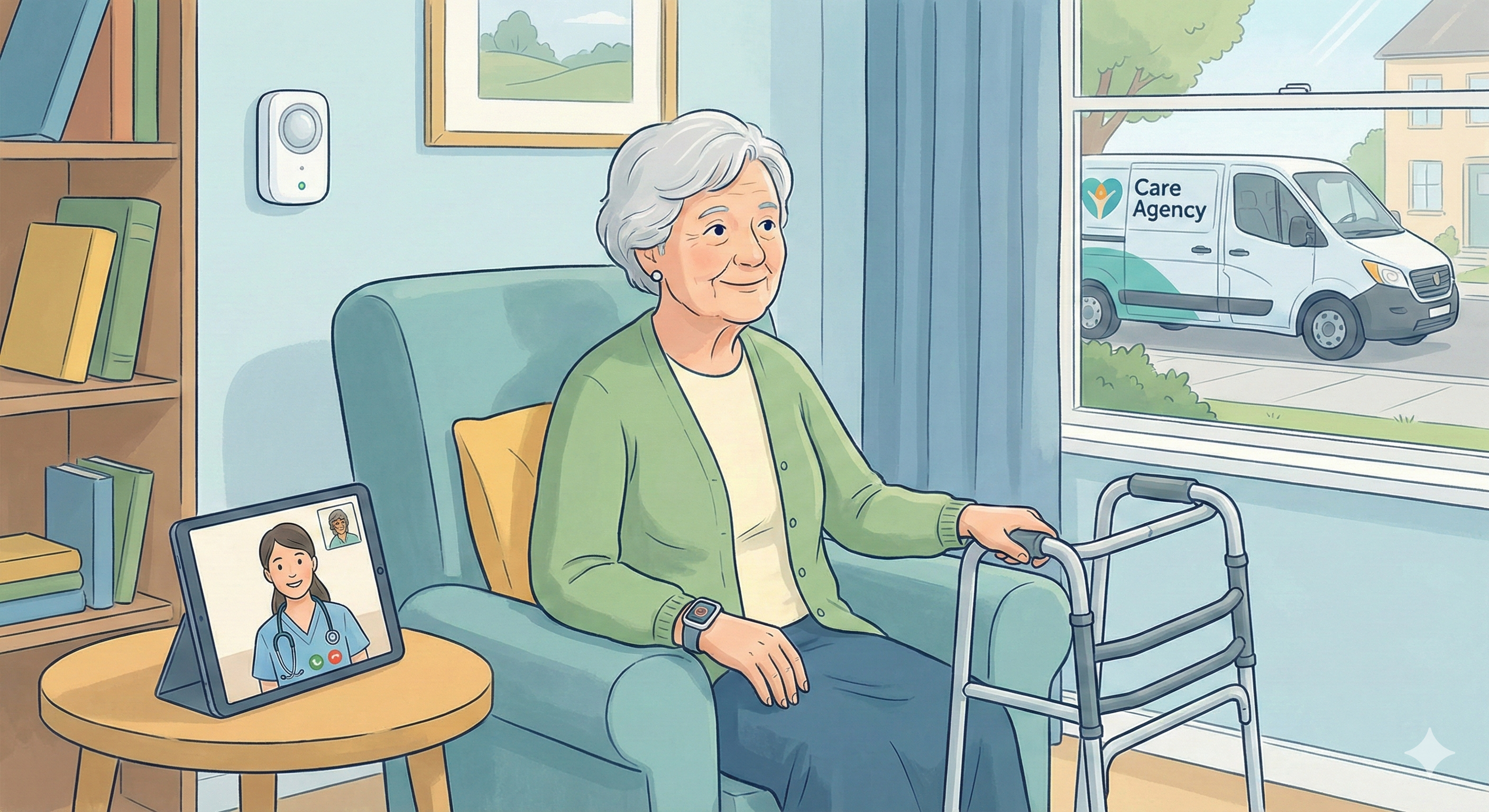
KOTA combines an AI companion with emergency response and proactive check-ins. For an older adult aging in place, this means:
For caregivers, it means fewer crisis calls, better context between visits, and less anxiety about what happens when they are not there.
Technology like KOTA increases effective care coverage without increasing staffing demands. That distinction matters.
See how KOTA fits into the caregiver crisis →
The hardest truth is this: compassion alone will not solve the caregiver crisis. Neither will software alone. Demographics have already set the constraints.
What organizations can control is how intelligently they respond.
Those that combine new care models, workforce sustainability, operational clarity, and supportive technology can serve more people without breaking the people who deliver care.
Those that do not will continue to burn out caregivers faster than they can replace them.


Ken is the founder and CEO of Ankota, a company that helps any organization that helps older or disabled people live independently in their home of choice. Having grown up with a disability and a passion for healthcare, this is Ken's mission
.png)
.png)




Trusted by home care agencies nationwide