
Adult Day Care Activity Ideas to Keep Clients Engaged
Adult day care centers provide a vital service, offering a ...
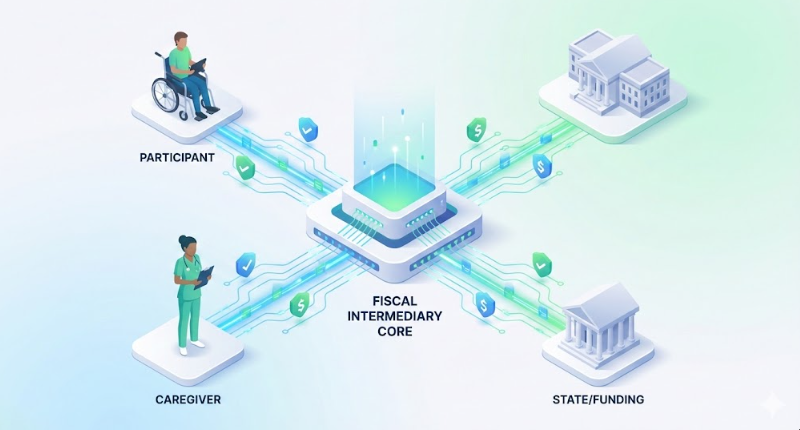
TL;DR: While often viewed merely as payroll processors, Self-Direction Fiscal Intermediaries (FIs) act as the critical governance hub that makes participant-directed care viable. As these programs scale, manual workflows can create administrative bottlenecks. Ankota’s Home Care Software streamlines FI operations by integrating EVV, real-time budget tracking, and payroll into a single platform—empowering agencies to ensure compliance and efficiency without sacrificing participant choice.
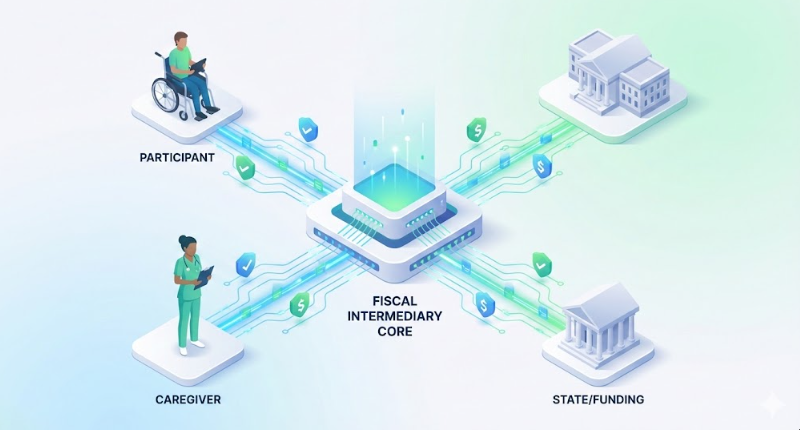
Self-direction has transformed how many people receive long-term services and supports. By allowing participants to choose their caregivers and direct how services are delivered, self-directed programs promote autonomy, flexibility, and individualized care. At the center of this model sits a role that is often misunderstood and under-explained: the self-direction fiscal intermediary.
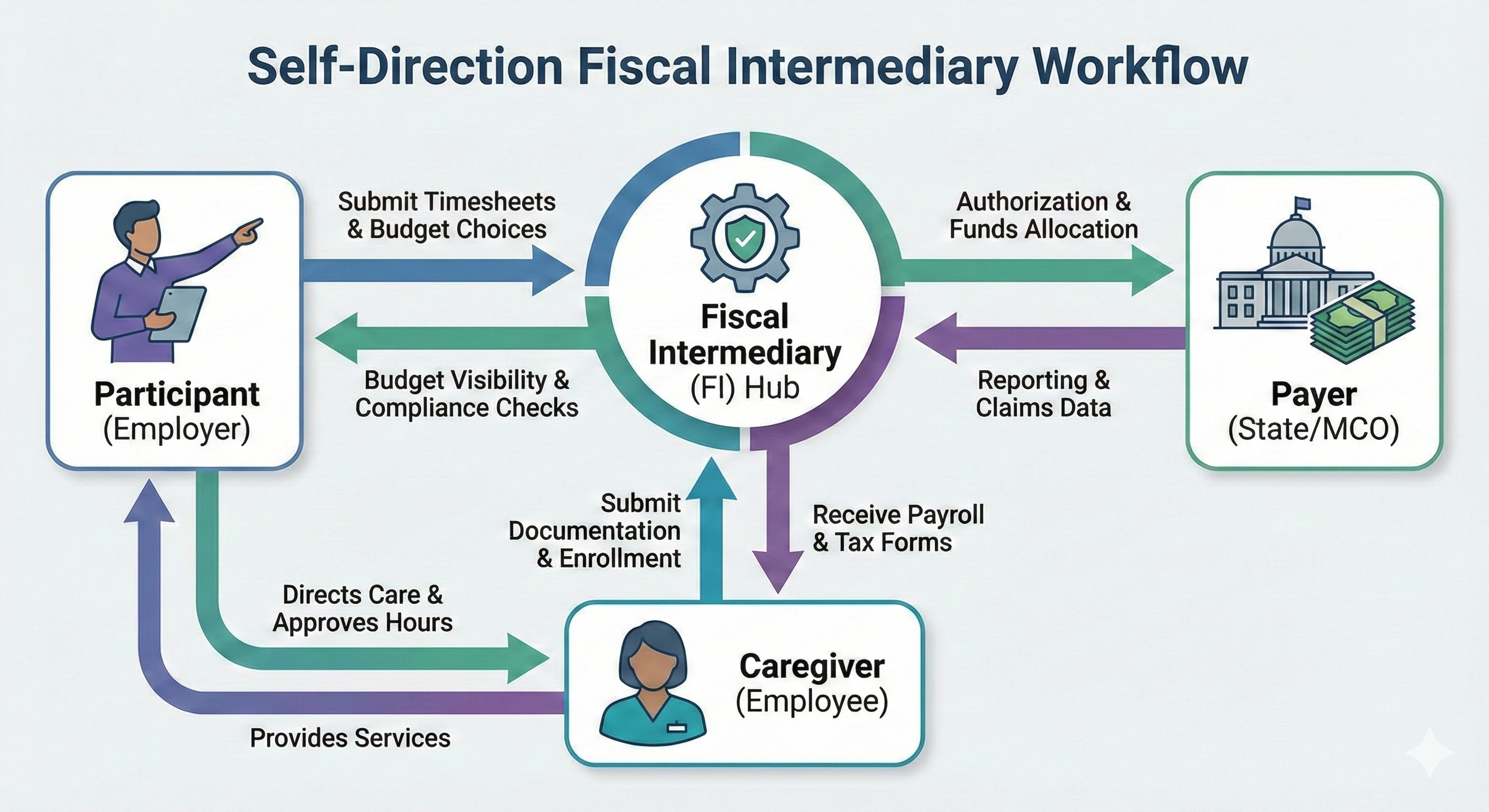
Most articles describe the fiscal intermediary (FI) as an administrative function handling payroll, taxes, and paperwork. While accurate, that framing is incomplete. In practice, the FI is a governance and coordination hub that determines whether self-direction works smoothly or becomes administratively overwhelming for participants, caregivers, and providers.
This guide explains what a self-direction fiscal intermediary actually does, how the role differs across programs, where common breakdowns occur, and how modern technology enables FI programs to scale without losing sight of participant choice.
Self-direction allows participants to:
While empowering, this flexibility introduces complexity that traditional agency models do not face. Someone must ensure wages are paid correctly, taxes are handled, services stay within authorization, and public funds are used appropriately. That responsibility falls to the self-direction fiscal intermediary.
The FI acts as a neutral third party that:
Without a strong FI structure, self-direction risks becoming administratively fragile.
At its foundation, an FI functions as the employer-of-record or co-employer, managing:
Accuracy and timeliness here directly affect caregiver trust and retention.
Self-direction operates within approved service plans and budgets. Fiscal intermediaries must:
This requires real-time visibility into services not just end-of-month reconciliation.
Public programs demand accountability. The FI ensures:
This role is protective, not punitive it keeps programs viable.
Many self-direction participants juggle:
Instead of empowering choice, this fragmentation often shifts administrative challenges onto participants and families.
When fiscal intermediaries lack timely data:
This reactive posture strains trust across the program.
As programs expand, FI teams must support:
Manual processes that worked at small scale quickly become bottlenecks.
Caregivers in self-direction programs expect:
When administrative systems are confusing, caregivers disengage worsening workforce instability.
Fiscal intermediaries operate best when they can see what services are planned and delivered. Integration with home care software allows:
This reduces back-and-forth and manual correction.
Connecting Billing, Payroll, and Oversight
Self-direction programs often intersect with broader HCBS operations. When FI tools connect to billing software, organizations gain:
Operational Task |
Traditional FI Method |
The Ankota FI Method |
|
Worker Timesheets |
Paper or manual entry portals |
Integrated EVV & mobile time capture |
|
Budget Tracking |
End-of-month spreadsheets |
Real-time "remaining balance" visibility |
|
Payroll Processing |
Manual export/import to third-party tools |
Direct sync between visits and payroll |
|
Audit Defense |
Sifting through disconnected files |
One-click, centralized compliance reports |
A regional FI program supporting hundreds of participants adopts an integrated platform. Participants submit time electronically, caregivers see schedules clearly, and FI staff monitor budgets in real time. Administrative questions decrease, payroll accuracy improves, and compliance reviews become routine rather than disruptive.
AI does not replace human judgment in self-direction—but it can support it by:
When applied thoughtfully, AI reduces noise and helps FI teams focus on meaningful oversight.

Organizations should ask:
These questions separate surface-level tools from true operational platforms.
As demand for self-directed services grows particularly among aging Baby Boomers and FI programs will face:
Those with integrated, participant-centered systems will be best positioned to grow responsibly.
Self-direction delivers meaningful autonomy only when supported by strong infrastructure. The self-direction fiscal intermediary is not just an administrator—it is the backbone that keeps participant-directed care viable, compliant, and humane.
Organizations that invest in integrated, transparent FI systems create better experiences for participants, caregivers, and staff alike.
If your organization supports or plans to expand self-directed services, explore how Ankota simplifies fiscal intermediary operations while preserving participant choice. Start a conversation to see how a unified platform can support your program.
To explore innovative solutions for goal tracking and strategy management in disability services, visit Ankota. Our advanced software is designed to support providers in delivering exceptional care, enhancing efficiency, and achieving outstanding results for individuals with disabilities.

Ken is the founder and CEO of Ankota, a company that helps any organization that helps older or disabled people live independently in their home of choice. Having grown up with a disability and a passion for healthcare, this is Ken's mission
.png)
.png)



Trusted by home care agencies nationwide