
Adult Day Care Activity Ideas to Keep Clients Engaged
Adult day care centers provide a vital service, offering a ...
Home care scheduling software has become the operational backbone of modern community-based care agencies. As providers navigate caregiver shortages, regulatory complexity, and surging client demand, efficiently managing caregiver assignments, client visits, and compliance documentation separates sustainable agencies from struggling ones. Manual scheduling systems—paper calendars, spreadsheets, and fragmented tools—strain administrators, lead to missed visits, and contribute to caregiver burnout. In an era where agencies must do more with less, home care scheduling software is no longer a nice-to-have—it's mission-critical.
To learn more about what home care software does, check out What is Home Care Software? A Full Guide for Agencies

This guide explains what modern scheduling platforms do, why they matter, how to choose the right one, and how integration with broader care technology (including AI-powered optimization) can elevate operations and care quality.
Home care scheduling software is a digital platform designed to automate, optimize, and scale the process of assigning caregivers to client visits, managing shift changes, and tracking real-time workforce activities. It replaces manual planning with intelligent matching based on availability, skills, client needs, and location—improving accuracy, accountability, and care continuity. Robust systems also integrate features such as real-time updates, mobile access, and GPS check-in.
Unlike basic caregiver management tools that simply track staff contact information, true scheduling software actively optimizes assignments, prevents conflicts, and connects directly to compliance and billing systems.
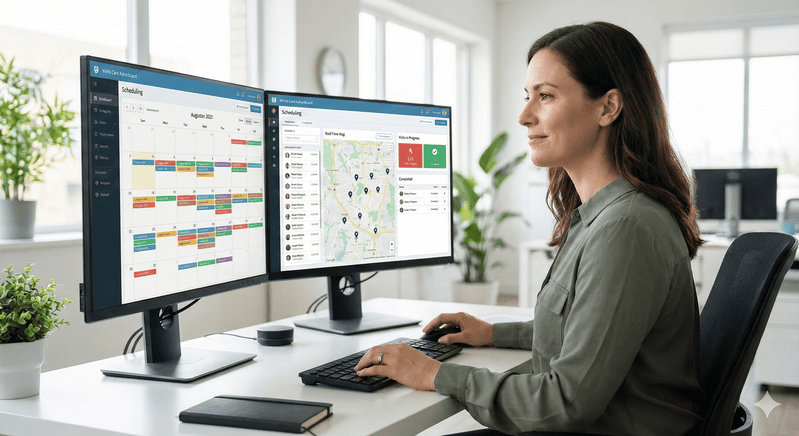
Dashboard interface showing an interactive caregiver schedule.
Alt Text: Dashboard view of home care scheduling with calendar, caregiver list, and client assignments.
The home care sector continues to grapple with persistent staffing shortages, high turnover, and uneven workforce distribution. Agencies struggle to fill open shifts, manage last-minute changes, and keep caregivers engaged. According to market research, turnover can exceed 60% annually, fueling pressure on operational systems to do more with less.
Home care scheduling software helps minimize unnecessary administrative burden, match caregivers more effectively, and ensure predictable schedules—leading to greater job satisfaction and improved retention.
A personal example: I've watched this play out firsthand at Ankota. One of our home care agency customers was losing caregivers because their manual scheduling meant staff never knew their hours more than three days out. Childcare, second jobs, life planning—all impossible. When we implemented predictive scheduling that gave them two-week visibility, their retention jumped 23% in six months. The software didn't change compensation or add benefits. It just gave people back control over their time.
Manual systems are prone to mistakes that directly impact service delivery—double bookings, overlooked shifts, and mismatches between caregiver skills and client needs. Automated scheduling ensures visits are assigned accurately and updates are communicated in real time, helping agencies deliver on their promises.
By providing caregivers with mobile access to their schedules, GPS-based check-in, and route guidance, scheduling software makes daily work more predictable and less stressful. It also allows for self-service shift management, which can help caregivers plan their lives outside of work—a key factor in improving retention.
Scheduling systems optimize for travel time, caregiver skills, and overlapping responsibilities. This means agencies can allocate hours more efficiently, reducing idle time and limiting overtime costs, which directly contributes to improved financial performance.
Modern platforms support regulatory requirements like electronic visit verification (EVV), time stamps, and secure documentation—making audits and billing processes smoother and more defensible.
Advanced software should match caregivers with client needs based on availability, certifications, geographic proximity, and preferences—ensuring quality care and fewer scheduling conflicts.
Caregivers and office staff need immediate visibility into schedule changes, cancellations, and emergencies—especially in home care, where conditions can change rapidly.
While desktop platforms provide comprehensive administrative control, mobile caregiver scheduling apps put power directly in the hands of field staff. The best systems offer both: robust office tools for schedulers and intuitive mobile apps for caregivers that support GPS check-in, digital documentation, and instant schedule access. When evaluating platforms, ensure the mobile experience isn't just an afterthought—it's where your caregivers live.
Mobile apps that support GPS clock-in/out help agencies verify that caregivers are on site, support compliance mandates, and streamline visit documentation.
Leading platforms increasingly embed AI-powered optimization to forecast staffing needs, detect scheduling bottlenecks, and optimize routing—reducing travel time and resource waste.
Connecting your evaluation: While these features are essential for scheduling specifically, agencies evaluating platforms should also consider broader system capabilities. Our comprehensive home care software buyer's guide covers evaluation frameworks, vendor questions, and total cost of ownership considerations that apply across all home care technology decisions.
To learn more about managing caregiver workflows effectively, check out Effective Clock-in and Clock-out Management in Home Care.
Scheduling software must protect sensitive patient information through encryption, secure authentication, and compliance with healthcare data standards. A thorough vendor evaluation ensures data integrity without sacrificing usability.
Technology transitions can be difficult for caregivers and schedulers accustomed to manual tools. Agencies should invest in training, supportive onboarding, and user-friendly platforms to ensure adoption.
While implementation requires investment, the long-term gains—reduced administrative hours, fewer compliance headaches, and improved retention—often outweigh upfront costs. It's important to budget for training, support, and device access as part of total cost of ownership.
An integrated platform that links scheduling with Medicaid waiver billing software simplifies reimbursement workflows, reduces billing errors, and accelerates payment cycles. Centralizing care data reduces duplicate entries and streamlines audit trails.
A clean, professional dashboard mockup showing a home care scheduling interface on one side, with linked Medicaid waiver billing data on the other. Include visual indicators like completed visits, verified hours, and automated claim generation, connected by arrows or lines to emphasize integration. Optionally, include subtle icons for caregivers, participants, and payment/claims.
Alt Text: Integrated home care scheduling and Medicaid waiver billing dashboard showing real-time service tracking, verified visits, and automated claim processing for streamlined workflows.
A modern scheduling solution can work in concert with safety monitoring tools—such as alerts for missed shifts or irregular check-ins—to help agencies proactively support client well-being.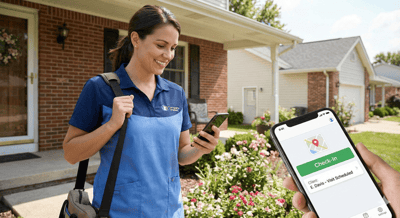
For agencies that manage self-directed care, robust scheduling helps coordinate client-chosen caregivers while ensuring compliance with fiscal intermediary requirements and proper documentation.
As we explored in our article on AI in home care, predictive algorithms allow agencies to anticipate demand spikes, recommend staffing levels, and recalibrate schedules based on historical patterns and emerging trends—a capability that gives agencies a competitive edge in tight labor markets.
(read more about AI in Home Care)
The aging Baby Boomer generation is driving unprecedented demand for home care services. More clients means more visits to plan, more staff to coordinate, and greater pressure on every operational system. A scheduling platform grounded in advanced automation and real-time visibility helps agencies scale without proportionally increasing administrative overhead—allowing them to serve more clients without sacrificing quality.
(read more about the caregiver crisis)
As the Baby Boomer generation creates an unprecedented need for home-based support, agencies can no longer afford the inefficiencies of disconnected management tools. At Ankota, we've helped agencies bridge the gap between high demand and limited caregiver supply through integrated platforms that merge scheduling, Medicaid billing, and senior safety monitoring into one cohesive environment.
Quantified outcomes from client implementations:
In a fragmented system, agencies are always playing catch-up. An integrated approach transforms this into a proactive model where compliance and documentation happen naturally as care is delivered. This not only meets state and federal mandates for Medicaid and EVV but does so in a way that supports—rather than hinders—the delivery of high-quality, sustainable care for the millions of seniors choosing to age at home.
Rather than treating scheduling as a back-office task, forward-thinking home care agencies recognize it as a strategic lever that influences caregiver retention, client satisfaction, compliance, and financial performance. By adopting modern home care scheduling software that features automation, mobile access, and intelligent optimization, agencies can meet today's challenges and prepare for future growth.
Ready to streamline your home care operations and empower your caregivers? Request a personalized Ankota demo today to see how unified scheduling, billing, and AI-driven insights can transform your agency's performance.
Ankota's mission is to enable the Heroes who keep older and disabled people living at home to focus on care because we take care of the tech. If you need software for home care, EVV, I/DD Services, Self-Direction FMS, Adult Day Care centers, or Caregiver Recruiting, please Contact Ankota. If you're ready to accept that the homecare agencies of the future will deliver care with a combination of people and tech, visit www.kota.care.

Ken is the founder and CEO of Ankota, a company that helps any organization that helps older or disabled people live independently in their home of choice. Having grown up with a disability and a passion for healthcare, this is Ken's mission
.png)
.png)




Trusted by home care agencies nationwide