
Adult Day Care Activity Ideas to Keep Clients Engaged
Adult day care centers provide a vital service, offering a ...

When a Direct Support Professional helps someone learn to take the bus independently, that's not a "visit"—it's a coaching session. When five participants spend an afternoon cooking together, that's not five separate "client interactions"—it's one shared activity with individual adaptations. This is why home care software fails I/DD agencies: the language, structure, and logic are all wrong.

The best software for I/DD HCBS programs includes goal tracking tied to person-centered plans, flexible scheduling for both group and individual supports, EVV integration with major aggregators like Sandata and HHAeXchange, Medicaid billing with state-specific code sets, automated progress summaries, and family portals for real-time updates. These tools must use I/DD terminology—participants, not clients; supports, not visits—and adapt to each state's unique requirements.
For agencies that support people with intellectual and developmental disabilities, finding the right software isn't just about billing or compliance. It's about giving your team the tools to help every individual live their best, most independent life. That's what makes I/DD Home and Community-Based Services programs so distinct from traditional home care—and why the wrong software can create more headaches than help.
Read What is I/DD Software
A lot of software companies treat I/DD programs as if they're just another flavor of home care. They're not.
Home care for older adults is mostly about safety, hygiene, nutrition, and companionship. I/DD services, on the other hand, are about learning and participation: helping someone master life skills, make friends, find work, and explore the community around them. One day might involve teaching cooking or bus navigation; another might focus on social skills or a shared hobby like gaming or art.
That difference in mission means the software must adapt to the way I/DD programs operate: multiple service types, small-group activities, complex documentation, and outcomes that aren't always easy to quantify.
Learn about the lingo and acronyms used in disability services
Electronic documentation in I/DD settings must capture more than task completion. Staff need to record progress toward goals, the strategies they used, and the level of support provided—whether full assistance or simple prompting. In North Carolina, regulations even require documenting both what the participant achieved and what the DSP did to help them get there. Software that supports structured goals, daily progress notes, and long-term summaries is essential. Even better if it helps staff connect each note back to a plan or outcome automatically.
Scheduling is another area where I/DD diverges from home care. Day habilitation programs, community outings, and supported employment often involve small groups. The best platforms allow flexible scheduling models that handle group sessions, staff-to-participant ratios, and individual supports without creating duplicate work for every participant.
Electronic Visit Verification rules change constantly, and every state has its own requirements. That's why flexibility is critical. Your software should integrate smoothly with the major aggregators—Sandata, HHAeXchange, Tellus/Netsmart, Therap, and Authenticare—so you're ready whether your state or managed care organization changes systems next year or next month.
Since I/DD HCBS programs are typically Medicaid-funded—even for affluent families—billing compliance is non-negotiable. The right software should generate clean, ready-to-send EDI claims while staying current with each state's format and code set. Agencies that self-direct services or operate under Fiscal Management Services models should look for built-in payroll, reimbursement, and budget tracking tools.
I/DD agencies live in a world of audits, quality reviews, and re-authorizations. Automated compliance checks, reporting templates, and real-time dashboards make it easier to stay ahead of requirements instead of chasing paper trails.
One of the most undervalued capabilities is family communication. The best platforms offer portals or apps where families and guardians can see updates, progress summaries, and photos—helping them stay involved without overwhelming staff.
The software doesn't speak our language. In home care, people talk about clients, caregivers, and visits. In I/DD, they talk about participants, support professionals, and supports. The difference matters. Using the wrong terminology creates friction with staff and regulators alike. Seek platforms that understand your vocabulary—or let you configure it.
Staff spend too much time documenting. Day programs and group settings move fast. Staff are on their feet teaching someone to use a stove or facilitating a friendship—not sitting at a computer. When documentation tools assume someone has time for detailed note-taking after every interaction, they create impossible workflows. Ankota helped a New Jersey provider solve this by letting an activity leader document a shared activity once for the group, then add individual notes for anyone who required special support like hand-over-hand guidance. The result: better compliance, less frustration, and more time spent with participants.
Summarizing progress takes forever. Even when notes are entered correctly, pulling them together into a meaningful summary is tedious. Modern software is beginning to address this with automation that condenses hundreds of notes into concise, human-readable reports, highlighting key outcomes and trends. This saves hours of staff time and gives supervisors clearer insight into each participant's journey.
Read How AI is Transforming HCBS
Medicaid runs HCBS programs differently in every state, which means your software must be highly configurable:
If your system can't adapt to each state's definitions, outcomes, and billing codes, you'll end up managing compliance with spreadsheets and sticky notes—a dangerous way to live.
Therap dominates the I/DD market but frustrates users with its complexity and inflexibility. HHAeXchange excels at Medicaid billing and EVV but was designed for home care, not disability services. Most other vendors serve just one or two states and struggle when requirements change.
Ankota approaches things differently. The platform was built with flexibility at its core—so agencies can configure it for day hab, group sessions, supported employment, or in-home supports. It integrates with all major EVV aggregators and makes it easy to involve families in each participant's growth. Most importantly, Ankota recognizes that I/DD services aren't about "care" but about support, independence, and outcomes.
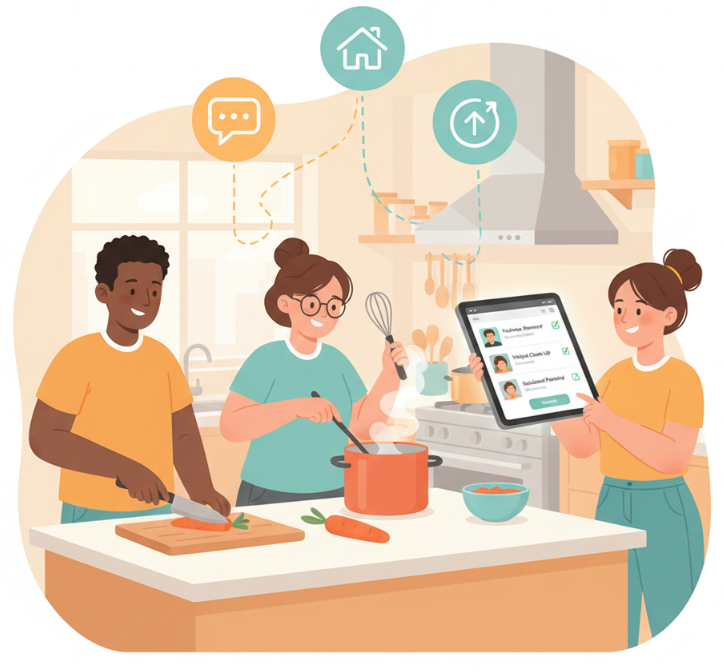
When evaluating software, prioritize these capabilities:
The right I/DD HCBS software does more than keep your agency compliant. It helps you tell the story of progress—how your staff's daily support turns into real-world outcomes for people building independence and belonging.
If your current system feels like it was built for someone else's industry, it probably was.
Ankota's software is purpose-built for agencies that support people with disabilities living and thriving in their communities. Learn how our flexible tools for scheduling, documentation, outcomes, and family engagement can simplify your operations and elevate your impact.
Contact us to learn more about Ankota's I/DD HCBS solutions.
Ankota's mission is to enable the Heroes who keep older and disabled people living at home to focus on care because we take care of the tech. If you need software for home care, EVV, I/DD Services, Self-Direction FMS, Adult Day Care centers, or Caregiver Recruiting, please Contact Ankota. If you're ready to accept that the homecare agencies of the future will deliver care with a combination of people and tech, visit www.kota.care.

Ken is the founder and CEO of Ankota, a company that helps any organization that helps older or disabled people live independently in their home of choice. Having grown up with a disability and a passion for healthcare, this is Ken's mission
.png)
.png)



Trusted by home care agencies nationwide