
Adult Day Care Activity Ideas to Keep Clients Engaged
Adult day care centers provide a vital service, offering a ...
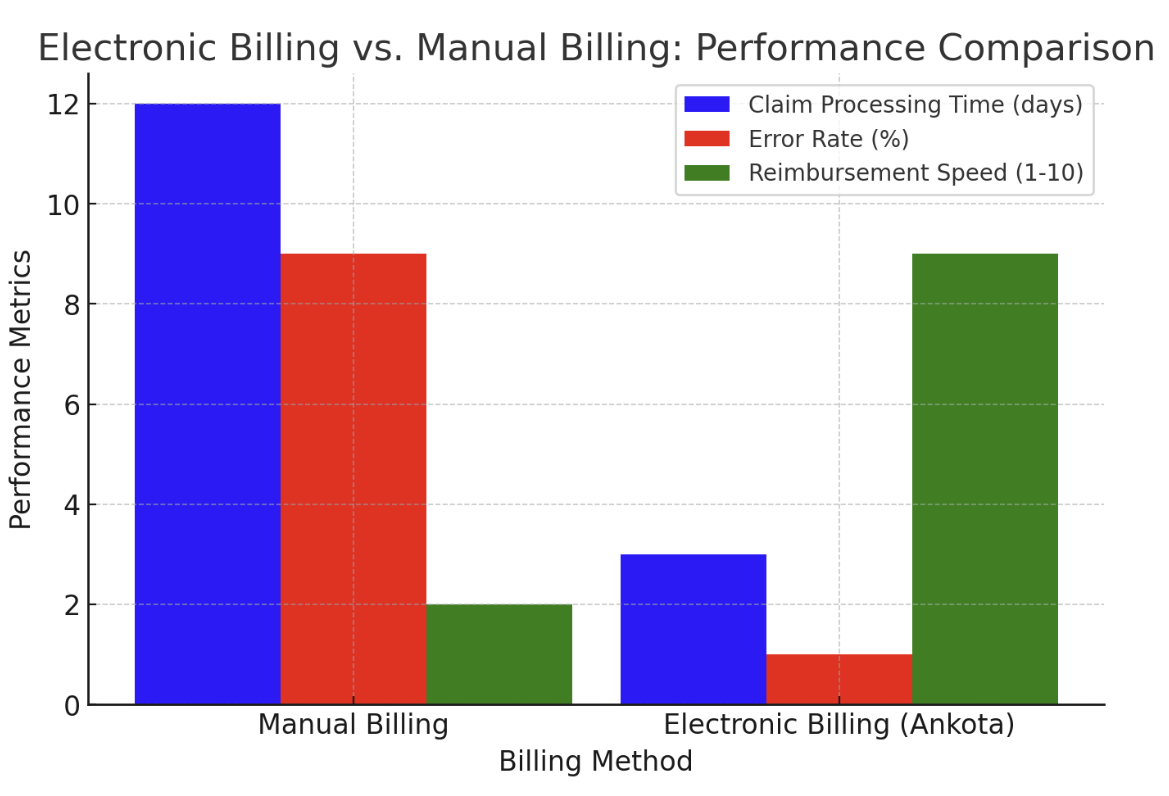
Here's something we hear from adult day center operators all the time: they got into this business to serve seniors and families, not to chase down Medicaid reimbursements. But if you're still running billing through spreadsheets or - worse - paper, you're probably spending 15-20 hours a week on payment processing that should take two. And every rejected claim you resubmit manually is time you're not spending on programming, staffing, or growing your census. Electronic billing isn't glamorous, but for most adult day centers, it's the single operational change that frees up the most capacity.
Start with real data, not a checkbox. Most adult day centers track attendance with a simple checkbox - someone showed up, someone didn't. That might feel good enough until you need to prove it. If a participant has an incident at home and someone claims they were at your center that day, a checkbox won't hold up. With a system that logs exact arrival and departure times, you have a defensible record - not just for billing, but for your center's credibility and liability protection.
This is also the foundation for accurate billing. When your system knows that Mrs. Johnson arrived at 8:47 AM and left at 3:12 PM, you're not guessing about billable hours. You're generating claims based on real data, which means fewer denials and fewer arguments with payers.
For centers billing Medicaid or other government programs, the real game-changer is electronic claims submission. If you're currently logging into a state portal and doing direct data entry for every claim, you already know how painful that is - and how easy it is to make mistakes. Electronic billing lets you submit claims directly from your system, which is faster and dramatically more accurate.
But submitting claims is only half of the revenue cycle. The other half is knowing what happened to them. With electronic remittance advice (ERA) - whether it comes back from Medicaid directly or through a clearinghouse like Availity - you can see exactly what was paid and exactly what was denied, down to the line item. Without this, you might not even realize a claim was rejected until it's too late. We've seen situations where a client's Medicaid ID had two digits transposed, the center never got reimbursed for months of services, and by the time someone noticed, the client had passed away and the timely filing window had closed. That's revenue you'll never recover, and electronic billing with ERA processing catches those issues in days, not months.
Wondering about the ROI of switching to digital? Break down the costs and long-term savings in our adult day care software pricing guide.
| Billing Scenario | Without Electronic Billing | With Electronic Billing |
|---|---|---|
| Attendance tracking | Checkbox on a sheet | Exact arrival/departure times logged automatically |
| Medicaid claims | Manual data entry into state portal | Electronic submission direct from your system |
| Denied claims | May not discover for weeks or months | ERA shows denials within days - fix and resubmit |
| Private pay invoicing | Manual invoices, manual payment tracking | Invoices generated from real attendance data, payments auto-reconciled |
| Revenue leakage | You don't know what you don't know | Closed-loop tracking from service to payment |

The biggest impact of electronic billing isn't any single feature - it's closing the loop. Right now, if you're billing private pay families, you're probably sending invoices through QuickBooks or something similar, then manually checking whether payments came in. When you get that credit card charge or ACH transfer, someone has to go back and mark it as paid. If they don't, you're chasing families who already paid, which is embarrassing, or you're not chasing families who haven't, which is expensive.
A proper electronic billing system ties it all together - the attendance data feeds the invoice, the invoice generates the charge, and the payment posts back automatically. That's a closed loop of revenue cycle management, and it's the difference between running your finances on hope and running them on data. You'll know your actual collection rate, your average days to payment, and - most importantly - exactly which dollars are still outstanding and why.

Switching to electronic billing does require some upfront effort - migrating your data, training your staff, and adjusting your workflows. In our experience, the centers that transition most smoothly are the ones that start by getting their attendance tracking right and then layer on Medicaid billing and private pay invoicing. You don't have to flip everything at once.
Learn from the home care industry's playbook on how to speed up the billing cycle and maintain a healthy cash flow.

To maximize the benefits of electronic billing systems, adult day care centers should adopt financial management best practices. Regularly reviewing and updating billing policies ensures that they remain aligned with industry standards and client expectations. Clear communication about payment terms, due dates, and accepted methods fosters transparency and reduces disputes.
Integrating electronic billing with other management systems, such as scheduling and electronic health records (EHRs), creates a unified operational ecosystem. This integration enhances data accuracy, streamlines workflows, and provides a holistic view of financial and operational performance.
Facilities should also leverage the reporting capabilities of electronic billing systems to monitor key financial metrics, such as revenue, outstanding balances, and reimbursement rates. These insights enable administrators to identify trends, address issues proactively, and plan for long-term growth.
If you’re still using manual methods to track payments, see why even the best Excel spreadsheet can't keep up with modern billing needs.
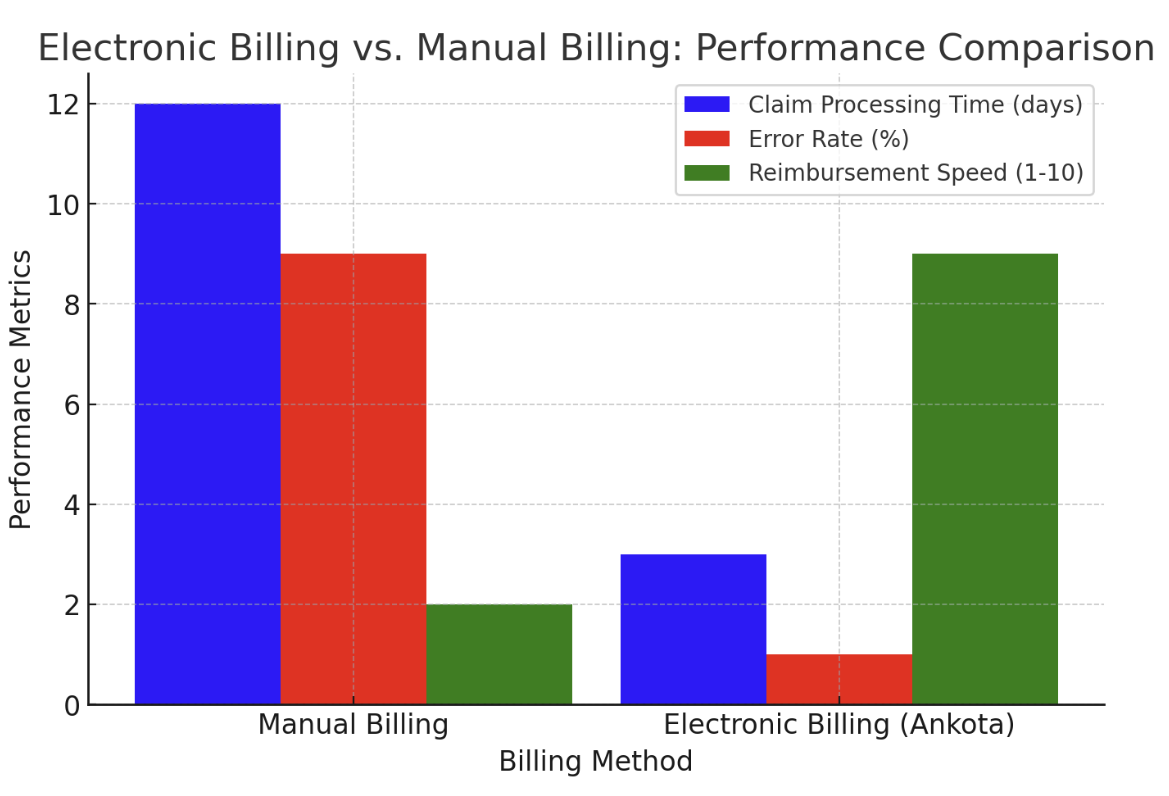
If you're evaluating electronic billing systems for your adult day center, the key question isn't which one has the longest feature list - it's which one understands your actual workflow. Adult day billing is different from home care billing. Your attendance patterns, your mix of Medicaid and private pay, your state's specific claiming requirements - these all matter. Ankota's adult day care software was built around these realities, not adapted from a home care platform. If you'd like to see how the billing workflow looks with real attendance data flowing through it, schedule a demo and we'll walk you through it.
Conclusion
Electronic billing won't solve every operational challenge at your adult day center, but it will solve the one that leaks the most money: not knowing what you're owed, what you've collected, and what fell through the cracks. Start with accurate attendance data, build toward electronic claims, and close the loop with payment reconciliation. Your future self - the one who isn't manually re-entering claims into a state portal at 9 PM - will thank you.
Ankota's mission is to enable the Heroes who keep older and disabled people living at home to focus on care because we take care of the tech. If you need software for home care, EVV, I/DD Services, Self-Direction FMS, Adult Day Care centers, or Caregiver Recruiting, please Contact Ankota. If you're ready to accept that the homecare agencies of the future will deliver care with a combination of people and tech, visit www.kota.care.

Ken is the founder and CEO of Ankota, a company that helps any organization that helps older or disabled people live independently in their home of choice. Having grown up with a disability and a passion for healthcare, this is Ken's mission
.png)
.png)



Trusted by home care agencies nationwide