Adult Day Care Activity Ideas to Keep Clients Engaged
Adult day care centers provide a vital service, offering a ...

The November 2026 midterms gave Democrats control of both the House and the Senate, and a lot of home care owners are asking whether the 2025 Medicaid cuts are about to be undone. The short answer: some relief is possible, but not before the first deadlines hit. Medicaid work requirements start January 1, 2027, two days before the new Congress is sworn in, and a full reversal would still need the President's signature. Our view at Ankota is simple. Plan your agency around the rules that are on the books today, and treat anything Washington changes as upside.
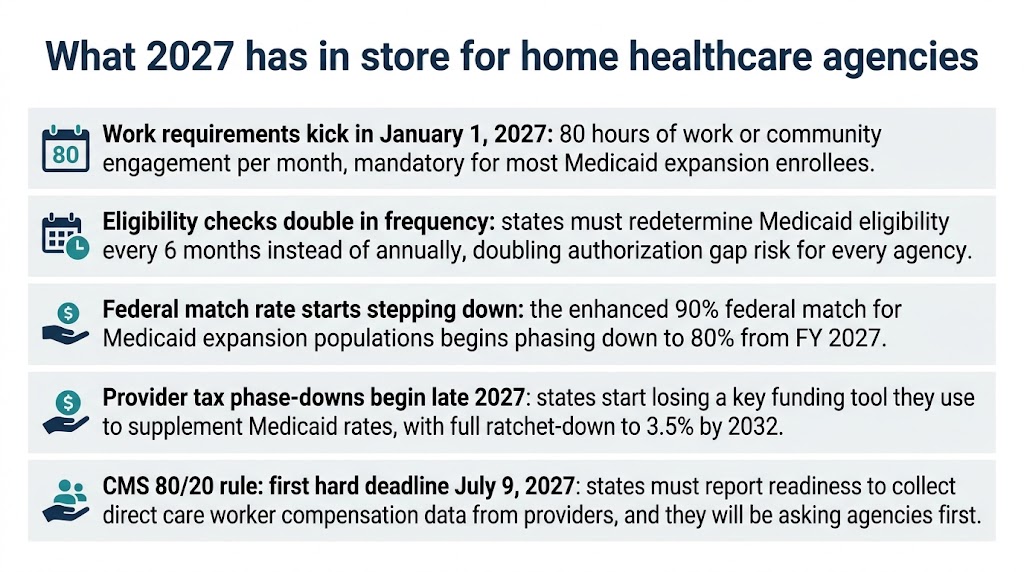
We are not a politics blog, and this is not a political article. People in our industry vote every which way, and so do the families we serve. What we can do is lay out what changed on election night, what did not, and what a home care, adult day, I/DD or self-direction provider should do with that information between now and the end of 2027.
No. The midterms changed who controls Congress, but they did not change any law. The Medicaid provisions in the 2025 reconciliation law (H.R. 1, often called the One Big Beautiful Bill Act) remain in effect, and their first deadlines arrive before the new Congress takes its seats on January 3, 2027. A bill to fully reverse the cuts has been introduced, but undoing a law takes a new law, which means either the President's signature or a two-thirds vote in both chambers to override a veto.
That does not mean nothing will change. Analysts across the spectrum point to a handful of realistic paths, which we cover below. But "realistic" and "fast" are different words, and agencies that wait for Washington before preparing will be preparing late.
"I've been in home care long enough to see Congress change hands more than once. What never changes is that a caregiver still shows up Tuesday morning, and somebody still has to get paid for that visit. Plan for the rules on the books, and treat anything Washington changes as a bonus."
- Ken Accardi, CEO of Ankota
Four dates matter most to home and community-based services (HCBS) providers, and all of them are written into law today:
One correction worth making, since it circulated widely in 2025: the final law did not cut the 90% federal match for the expansion population. Earlier versions proposed that, and it did not survive. What the law did end was the extra 5-point bonus for states that newly expand. You can see the state-by-state picture in KFF's analysis of state fiscal conditions heading into FY 2027.
Mostly, yes, but "exempt" does not mean "nothing to do." The work requirement applies to the expansion adult group. People who qualify through disability, are medically frail, care for a child 13 or younger or a person with a disability, or are pregnant or postpartum are exempt, and most HCBS waiver and I/DD participants fall outside the requirement entirely. The risk is procedural. An exempt person who misses a state notice, or whose records do not match what the state's data system expects, can still lose coverage for a paperwork reason.
We have seen this movie before. When Arkansas ran work requirements in 2018, about 18,000 people lost coverage before a court stopped the program, and later analysis found most of those losses came from reporting problems rather than people failing the requirement. The rules are also still moving: a federal judge in Boston has already vacated part of CMS's rule on how medically frail enrollees prove their exemption.
Here is a wrinkle that only shows up when you work across program types, as we do at Ankota. In self-direction programs, many paid workers are family members, and some of them are expansion adults themselves. Their paid caregiving hours are employment and should count toward their own 80 hours, but only if the state's verification system can see those wages. If you run a fiscal intermediary or FMS, ask your state now how your payroll data will show up in its work verification process.
Caution
If a client's Medicaid lapses during a renewal, their service authorization lapses with it, and visits delivered during the gap usually cannot be billed. Exempt clients can still get caught by a missed notice. Do not assume a client is safe just because they would qualify for an exemption.
Most analysts expect changes at the edges rather than a full rollback, and they point to a few specific paths. The most likely vehicle is a government funding bill, which a President cannot easily veto without shutting down the government. Riders in a funding bill could delay the work requirement, narrow who has to report, or require states to verify work and exemptions from data they already have instead of new paperwork. A possible debt-limit deadline in 2027 could become another bargaining point.
Outside of Congress, the courts and CMS will keep shaping how the rules work in practice, and the new majorities can hold oversight hearings on how states and CMS are implementing them. Home care trade groups expect, in the words of one, "a different tone, but not a change in priorities," and they note that Medicaid rates are still set in state capitals.
There is also real common ground here. Keeping older adults and people with disabilities at home is less expensive than a nursing home, and it is what most people want for themselves and their families. That argument has had supporters on both sides of the aisle for decades, and it is worth making to your state and federal legislators this winter, while states are writing their budgets.
"Keeping people at home isn't a red idea or a blue idea. It's the less expensive choice and the more humane one. I've watched people from both parties agree on that the moment they sit down with a family trying to keep Mom at home."
- Ken Accardi, CEO of Ankota
Prepare for the law as written, and build in room for good news. The agencies we see handling uncertainty best are not guessing which way Congress will go. They are getting their own house in order on the things they control, so that either outcome is manageable.
Know which clients are exempt, from your records rather than your memory. When states start sending notices in January, you want to see at a glance which clients are waiver participants, which qualify through disability, and which are expansion adults who will have to report.
Track every notice. For each client, know whether a work requirement or renewal notice arrived, whether someone responded, and when the next renewal is due. A simple tracker beats a coordinator's inbox. Help families recognize the notice when it comes, because a letter that sits unopened on a kitchen counter is how procedural terminations happen.
Watch authorization end dates 30 to 45 days out. With renewals every six months for the expansion group, gaps will come around twice as often. Our guide to avoiding Medicaid waiver billing denials in HCBS covers the authorization habits that catch these before they become unbillable visits.
Budget two scenarios, not one. If your state relies on provider taxes or directed payments to fund higher HCBS rates, model 2027 and 2028 once with those dollars holding and once with them stepping down. If they hold, you have margin you did not plan on. If they step down, you are not caught short.
Capture the revenue you already earned. Authorized hours that go undelivered disappear when the authorization period closes, and visits that fail EVV checks do not get paid. In a tighter funding environment, that leakage matters more than ever. We break down where it hides in how home care agencies leak profits without knowing it.
Tip
Before January, pull a list of every active Medicaid client with their eligibility group and next renewal date. An agency with 150 Medicaid clients and a six-month cycle has roughly 25 renewals a month to watch. Knowing which 25 is the difference between a quiet month and a cash-flow surprise.
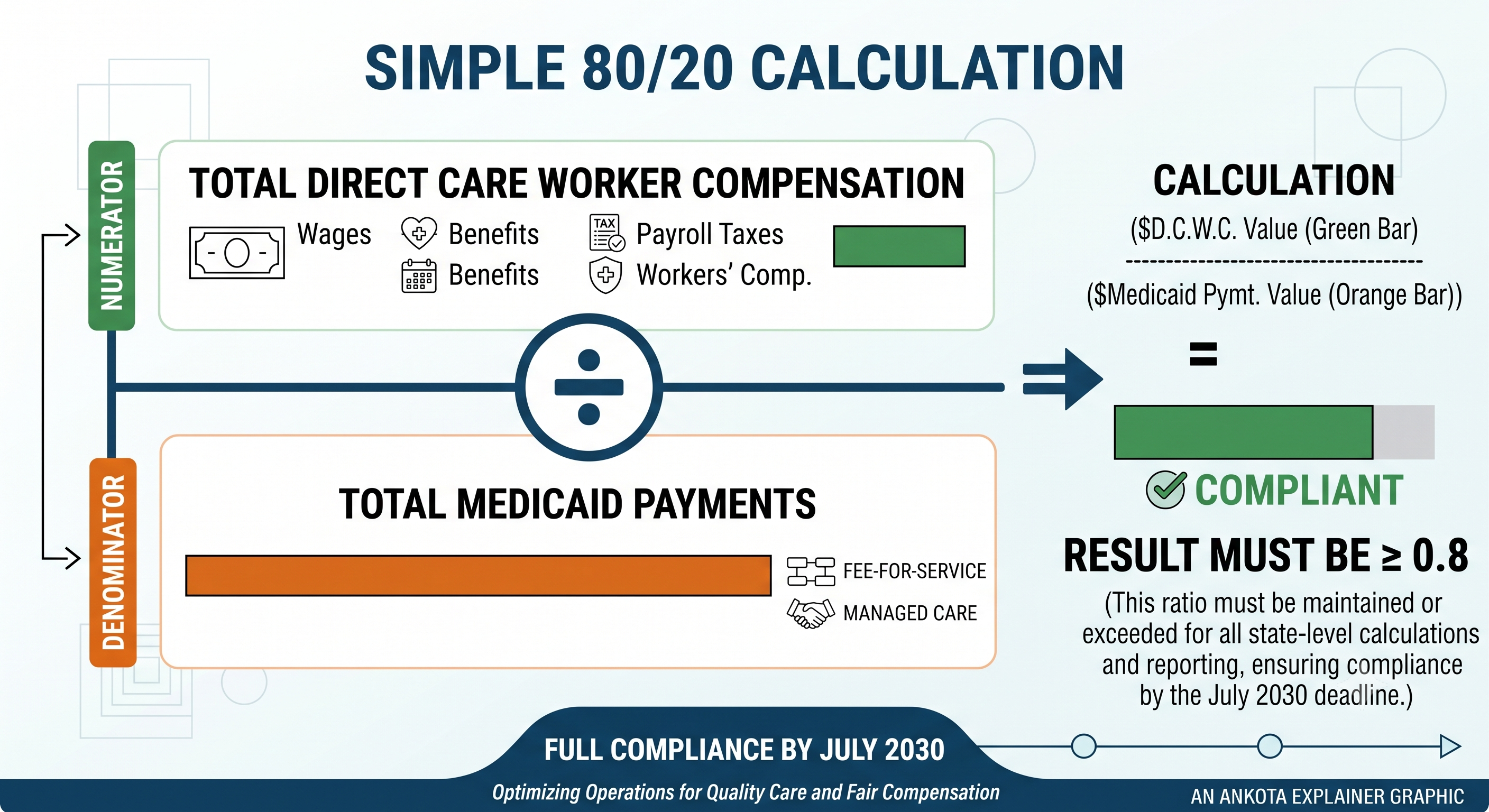
Yes. The CMS requirement that most Medicaid payments for personal care and homemaker services reach direct care workers was not part of the 2025 law, and states are building the reporting to support it. Tighter budgets make the question sharper, not softer: a state looking for savings will want to know where its HCBS dollars go. We cover what to track in our article on the CMS 80/20 rule and what HCBS agencies should track now.
Most of the 2027 work is operational, not technical: knowing your clients, watching the calendar, and talking with families early. Software earns its keep by putting the answers in one place, so eligibility groups, authorization end dates, Electronic Visit Verification (EVV) status and billing all line up for the same client without a weekend of spreadsheet work. That is what Ankota's EVV and Medicaid home care software is built to do. For a deeper look at how EVV works across state aggregators, see our complete guide to Electronic Visit Verification.
If you want a second set of eyes on how ready your agency is for 2027, talk to our team. We are happy to walk through it with you, whatever happens in Washington.
Not before they start. Work requirements begin January 1, 2027, and the new Congress is sworn in January 3. Fully repealing them would take a new law signed by the President or a veto override. A delay or narrowing through a government funding bill is more realistic, but nobody can promise the timing, so agencies should prepare as if the requirements stand.
Mostly not. The requirement applies to expansion adults ages 19 to 64, and people who qualify through disability, are medically frail, or care for a child 13 or younger or a person with a disability are exempt. Exempt clients can still lose coverage if they miss a state notice, so tracking notices matters even for an exempt caseload.
Provider tax limits for expansion states begin tightening in October 2027 and step down toward 3.5% over several years. State-directed payments above the new caps start stepping down in 2028. If your state uses these dollars to fund higher HCBS rates, budget for a scenario where those rates come under pressure.
No. That was proposed in earlier versions of the bill but did not make it into the final law. The law did end the extra 5-point incentive for states that newly expand Medicaid.
Identify each Medicaid client's eligibility group from your records, set up a simple notice and renewal tracker, flag authorization end dates 30 to 45 days ahead, and budget two scenarios for 2027 and 2028. These steps protect your revenue whatever Congress does.
Yes, in a specific way. Some paid family caregivers in self-directed programs are expansion adults themselves. Their paid hours should count as work, but only if the state's verification system can see their wages. FMS and fiscal intermediary organizations should ask their state how payroll data feeds into work verification.
Ankota's mission is to enable the Heroes who keep older and disabled people living at home to focus on care because we take care of the tech. If you need software for home care, EVV, I/DD Services, Self-Direction FMS, Adult Day Care centers, or Caregiver Recruiting, please Contact Ankota. And if you're ready to see how the most innovative agencies are using AI to empower their caregivers and automate the rest, meet your new companion at www.kota.care.

Ken is the founder and CEO of Ankota, a company that helps any organization that helps older or disabled people live independently in their home of choice. Having grown up with a disability and a passion for healthcare, this is Ken's mission






Trusted by home care agencies nationwide