
Adult Day Care Activity Ideas to Keep Clients Engaged
Adult day care centers provide a vital service, offering a ...
.png)
Today’s guest post is from Henry Kingston. Henry is a passionate blogger, and loves writing as it's his obsession. He has written on various topics like healthcare, home care for the elderly and about different other aspects of life. Follow @Henrykingston30 for more updates.
What I find especially compelling about Henry’s post is that it focuses on the very important role non-medical home care played in post-acute recovery for his aunt. I also recently heard a presentation by Bob Roth from Cypress Home Care in Phoenix. Bob was speaking on the role of non-medical home care in the accountable care organization model. While we generally think of post-acute recovery as being the role of Medicare-certified home health care, Bob reminded his audience that home health only stops by once or twice a week for around 45 minutes. Looking at clients in his agency he observed that his average client receives 28 hours of care per week whereas clients who have just been discharged from the hospital average over 40 hours a week of care. I had knee surgery myself this past summer and while I’m a younger person who didn’t require home care, I found that the surgery took a toll on my energy level and that it was harder to complete activities of daily living. We’ll write more about this as we explore the role that non-medical home care agencies can play in bundled payments.
My aunt, Sara, aged 75, had become physically very weak and her movement was restricted as she had undergone a hip replacement surgery, and was also a diabetes and hypertension patient. Since it was not possible for me to tend to all her needs, it became necessary to look out for a homecare assistant who could help her out with her day to day activities.
We contacted several home care agencies and finally found a young woman named Alice fit for the job. Alice was a petite woman, strong and physically fit with a pleasant disposition, with the added advantage that she was a retired nurse. The home health care agency had specifically instructed Alice about caring for my aunt, her medications and other requirements.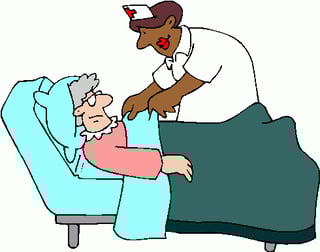
Initially, my aunt was a little skeptical, keeping in mind her age and condition, but Alice was really compassionate and tolerant and soon she became comfortable with her. In the initial days just after surgery, she was in a lot of discomfort and pain, and it was Alice who took care of all the daily chores, general housekeeping to maintain sanitary conditions in the home environment and personal grooming and also aided Sara with her recovery, both physically and psychologically. After all the senior home care agency’s service seemed promising.
Alice was a natural where caring was concerned and often lifted and turned my aunt to prevent bed sores as she was bed-ridden and also a diabetic. She would often lift her very cautiously to make her bed and change the linens regularly. She took extra care when transporting and taking her for the doctor’s appointment. She also prepared the meals and would often feed her too, gave her medications timely, did her laundry, and was always available to run any little errands for my aunt. She would check on the wound to see if it was infected, kept a watch on the vital signs, monitored her fasting and post-meal sugar levels.
My aunt had to be sponged regularly, and as she wore adult diapers, they, too had to be changed. Alice did these with discretion and never did my aunt feel her dignity at stake. As my aunt got better and could sit and move around in a wheelchair, Alice would keep aunt busy with reading aloud to her favorite segments from magazines, newspapers and also play card or board games with her to keep her mentally active and alert.
With time, Alice and my aunt developed a bonding with each other and would often spend time solving crossword puzzles, word searches and art and craft activity that my aunt particularly enjoyed as she had been an art instructor in her younger days. Aunt Sara made decorative frames and vases from discarded material and Alice enjoyed giving her ideas and helping her out. Sometimes they would spent time on the front porch or in the backyard to just enjoy the weather or over a cup of tea or coffee to bask in the sunlight.
Soon my aunt, was taking baby steps with the help of Alice and the walker. Alice had been with my aunt for almost a year, and now although fully recovered, Sara enjoys her companionship and Alice is glad to be there for her whenever required.
-----
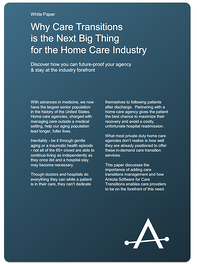
One of Ankota's free white papers, "Why Care Transitions is the Next Big Thing for Home Care", is available to download by clicking the link or the picture below.
If you're interested in scheduling an online demo of our home care or care transitions software solutions, just click this button:

Ankota provides software to improve the delivery of care outside the hospital, focusing on efficiency and care coordination. Ankota's primary focus is on Care Transitions for Readmission avoidance and on management of Private Duty non-medical home care. To learn more, please visit www.ankota.com or contact us.

Ken is the founder and CEO of Ankota, a company that helps any organization that helps older or disabled people live independently in their home of choice. Having grown up with a disability and a passion for healthcare, this is Ken's mission
.png)

.png)




Trusted by home care agencies nationwide