
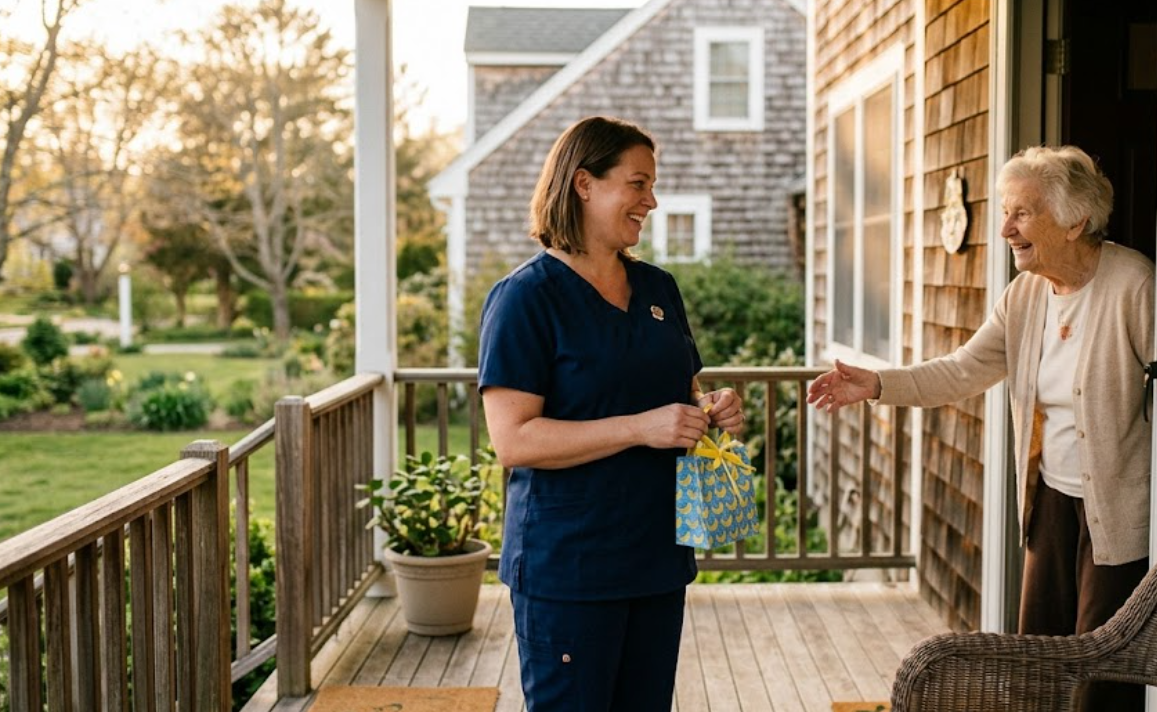
Adult Day Care Activity Ideas to Keep Clients Engaged
Adult day care centers provide a vital service, offering a ...

When a family calls a home care agency, it is almost never a planned decision. It is a crisis, and the person on the other end of the line is scared, exhausted, and carrying more than they will admit. The agencies that win their trust do three things most competitors skip: they treat the first call as a relationship instead of an intake form, they hire for empathy over credentials, and they protect continuity of care so the same faces keep showing up. On the Home Care Heroes and Day Service Stars podcast, Lance A. Slatton, who runs Michigan's top-ranked agency and spent three years as a family caregiver for his own father, made the case for all three. At Ankota, we build software that handles the logistics behind those moments so your team can stay focused on the human being in front of them.
Most agency owners are optimizing the wrong thing on the first phone call. They are counting hours, days, and dollars per week while the family on the line is quietly testing whether anyone here actually understands what they are going through. We talked about this at length with Lance A. Slatton, senior case manager at Enriched Life Home Care Services and host of the web show All Home Care Matters, and it is one of those conversations that reframes how you think about your own front door.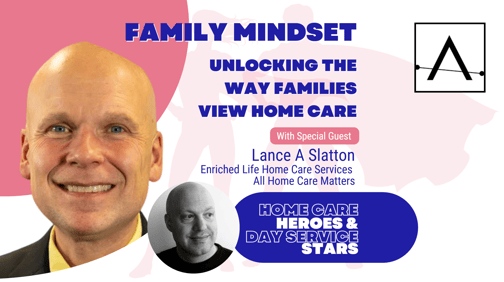
This article is drawn from our Home Care Heroes and Day Service Stars conversation with Lance A. Slatton of Enriched Life Home Care Services and All Home Care Matters. Listen to the full episode here.
Because it usually is one. Families rarely call a home care agency on a calm Tuesday after months of planning. They call because a parent fell, a hospital is about to discharge, or a spouse can no longer manage alone, and they need an answer today. That emotional state is the context for everything that follows, and agencies that treat the call as a routine transaction miss it entirely.
Picture the caller. Your mom lives in Florida, you live a thousand miles away, she just fell and landed in the hospital, discharge is Monday, and you have to get back to your own kids and your own job. You are not shopping for a vendor. You are trying to hold your life together with one hand and rescue your parent with the other. The research backs up how common and how heavy this is: the 2025 Caregiving in the U.S. report from AARP and the National Alliance for Caregiving found there are now 63 million family caregivers in America, nearly one in four adults, an increase of 20 million in a decade. Only 11 percent of them received any medical training, yet more than half manage complex tasks like wound care and medication. These are the people calling you, and most of them are improvising.
When we understand that, the first call stops being an intake form and becomes the first act of care.
The biggest thing agencies miss is depth. A thorough, unhurried history at intake is what protects the family and prevents the scheduling disasters that destroy trust before care ever starts. Lance compares it to seeing a doctor: you give a little information to book the appointment, but before the doctor treats you, you fill out a detailed history, because a targeted need requires real information. Home care is no different, and the agencies that rush it pay for it later.
Lance shared a story that makes the point better than any checklist could. A family used one of the automated placement sites, entered the day, the time, and their mother's name, and that was the entire intake. A caregiver showed up who turned out to be allergic to the dog in the home, had to leave, and by the time a replacement arrived hours later, the family had already missed the appointment they hired help for in the first place. Everything that went wrong was knowable in a five-minute conversation nobody had.

Here is a red flag we have learned to watch for on our own side of the business, and it maps almost perfectly onto home care:
I sell home care software, and sales is not my native habitat. I'm a tech guy at heart. But the best demos we ever give are the ones where the customer is doing most of the talking, where we're learning what makes their agency special and what their real pain points are. And the flip side is just as reliable: when the very first question out of someone's mouth is "what does it cost?", that's usually not a good sign. It tells me they're shopping on price and haven't thought about the relationship or the depth of what they're getting. It works exactly the same way when a family calls you.
A family that opens up to you, that tells you the whole messy story of what mom has been through, is handing you the information you need to actually help. Your job on that first call is to earn that.
Most agency owners have never been a family caregiver themselves, so they underestimate the sheer cognitive load families carry. You cannot fully see a weight you have never lifted. Lance can, because he lived it, and his story is the emotional center of this whole conversation.
Years ago, newly married and on his way to medical school, Lance got a call. His father, a healthy and active retired Marine, had slipped on Michigan black ice, landed on his tailbone, and the bruise never healed properly. It turned into an abscess, the infection reached his bloodstream and then his bone, and a home health nurse called to ask whether dad could come stay with Lance and his wife for a couple of weeks while the wound healed. Those couple of weeks became almost three years and seven major surgeries. And in all that time, through all that face time with social workers, discharge planners, and surgeons, nobody ever once said the word "caregiver" to him.
I never identified myself as a caregiver. I was just a son, dutifully helping my dad through a time when he needed help. Nobody plans to be a caregiver. When you're expecting a baby, there are books and classes and all this support waiting for you. Nobody hands you anything when you become a caregiver, and by the time you are one, you don't have a spare minute to go take a class anyway, because every ounce of your energy is already going to your loved one. Around the two-and-a-half year mark I called my wife and said, there have got to be millions of people like us, and no one is helping them.
That is the emotional, physical, and financial toll that families carry silently. And it shows up in small, unglamorous ways that agencies almost never ask about:
My sister has been the real caregiver for our mom, and she said something that stuck with me. She'd never been a homeowner before, and now she's managing mom's house, and she just never knew things like you have to shut off the outdoor water before the first freeze. The rest of us siblings are far away wishing we could do more, and it turns out there are things we actually could help with. She told me, look, when I need a new hose and a good sprayer for it, you're in Florida, but you would've ordered the right one off Amazon in two minutes and known which one is any good. So order it and have it shipped here. Little stuff like that. That's the load nobody sees.
When you build your intake and your culture around the reality of that load, families feel it immediately. You can read more about the demographic wave driving all of this in our piece on why demographics are forcing new care models, because the 63 million number is only going one direction.
You hire for heart, because tasks are teachable and empathy is not. Lance's agency requires two years of professional experience and the usual credentials, but they make deliberate exceptions for people whose lived experience proves they have what cannot be trained. This is where the word "caregiver" gets interesting, because to an agency a caregiver is your employee, but the empathy you are hiring for often comes from someone's history as a family caregiver.
I can teach you tasks. I can't teach you heart and soul. We hired a person who took care of their own disabled son for 28 years. No letters after the name, but the heart, the passion, the understanding of what that family is going through? That's worth more to me than a stack of certifications, because if you're going to be in someone's home caring for their mother, I need to know you can relate to that family on a level that's personal, not just professional.
We have heard the same insight from other corners of the industry. The best recruiting processes now ask candidates directly about family caregiving experience, because a person who spent years caring for a parent has learned lessons no class teaches. That runs against the reflex to filter every applicant down to a CNA with a fixed number of years, and in a labor market this tight, that reflex quietly screens out some of the most empathetic people available. We dug into this pattern in what agencies get wrong about recruiting, and it pairs naturally with the point Lance is making here.
There is also a connection worth naming that a siloed home care operator can miss. If you run an adult day center alongside your home care agency, that center becomes a place to observe empathy in action and a lower-stakes training ground where a promising new hire can grow into the work before they are alone in someone's living room. That is one of several reasons we keep arguing that adult day services and home care are more powerful together than apart.
Continuity builds trust because families are not hiring a company, they are hiring a relationship, and consistent matching is what turns a stranger into someone mom looks forward to seeing. The fastest way to break that trust is to treat caregivers as interchangeable and families as a schedule to be filled by any warm body.
Lance told a story that is hard to forget. A couple, the mother with heart trouble and the father with early-onset dementia, hired a well-known company for an overnight shift. That company sent seven different caregivers to the house for one shift. When the family asked why, the company's answer was that they wanted to be sure someone showed up. Most of the seven left, two stayed and argued in front of the couple about who needed the hours more, and the family sent both of them home and fired the company the next morning. That was day one.
The root cause is what Lance calls the cheat code. Some agencies hire constantly to build a giant pool of candidates, so that when a call comes in they can run down the list until someone says yes. It feels efficient, but it treats caregivers as a commodity, and it produces exactly the churn families cannot tolerate. Lance's agency does the opposite: they hire only when there is a real opening, they match deliberately, they keep schedules consistent, and case managers do drop-in visits, some planned and some surprise, long after the sale is closed.
This is the same theme that runs through the complaints we hear most often from clients. When we cataloged the top client grievances in home care, inconsistency and the sense of being passed around topped the list. Continuity is not a soft nicety. It is the product.
There is a version of this that plays out even inside facilities. My family knows it firsthand:
My mom is 89 now with fairly advanced Alzheimer's, and she's moved into a care facility. But even there, my sister still checks in constantly, and we bring in a caregiver to spend one-on-one time with her, because she has severe hearing loss and gets left out of the group conversations. We've watched private equity buy the facility, change everything, and the quality of care drop. So even in a building whose whole job is care, the consistent, familiar face is what actually protects her. That's continuity, and it matters at every level.
And when the match is right, price stops being the point:
When my Aunt Myrna in Queens needed care, there was this fellow, an Irish guy who'd been in home care a long time and grew up in the same neighborhood. He came to the house, they talked, and that was it. It wasn't about the rate or the features. They probably swapped stories about Bayside and the same cookie shop they both grew up going to, and she connected with him. That connection is what she was really buying.
Technology helps by taking the operational and compliance burden off your team so their attention stays where it belongs, on the family and the caregiver, not on paperwork. At Ankota, this is the whole philosophy: software should make you less of an island, not just digitize your busywork. When scheduling, visit verification, billing, and communication run cleanly in the background, your case managers get their time back to do the unhurried intake calls and drop-in visits that actually build trust.
The same logic applies to keeping the caregivers you worked so hard to hire. One of Lance's best operational tips costs almost nothing: during onboarding, every new hire fills out a sheet of about 20 favorites, their go-to food, restaurant, store, and hobbies. Then, at random moments, a case manager surprises them at their assignment with a small wrapped gift built from that list.
A lot of our people have never experienced that kind of appreciation from an employer. We tell them they're the top of the totem pole, because they're the face of this company, and then we show them we mean it. What we say is what we do. That's what's kept us ranked number one in Michigan for years.
That instinct, treating recognition as a system rather than a whim, is exactly what our caregiver rewards and retention tools are built to scale, so a growing agency can keep that personal touch even when the case managers can no longer remember every birthday by heart. Turnover is expensive and retention is almost always cheaper than recruiting, a theme we return to often because it is where technology and heart actually reinforce each other rather than compete. For the bigger operational picture, our guide to home care growth best practices ties these threads together.
None of this replaces the human relationship. It defends it.
If this conversation resonates, the practical question is whether your systems free your people to be present or force them to be clerks. Ankota's home care software handles scheduling, EVV, billing, family communication, and caregiver retention in one connected platform, so the humans in your agency can spend their energy on the crisis call, the careful match, and the drop-in visit that families remember. If you would like to see how that works for your agency and, where it fits, your adult day center too, contact Ankota and we will show you.
You can hear the full conversation with Lance A. Slatton on the Home Care Heroes and Day Service Stars podcast, and explore his family caregiving resources at All Home Care Matters.
Gather as much history as the family will share, not just the day, time, and hours needed. Ask about the client's medical history, cognitive status, assistive devices, home environment (pets, stairs, allergies), medications, and, just as important, how the family is coping. The automated-placement horror stories almost always trace back to a shallow intake that skipped a detail a five-minute conversation would have surfaced. A thorough history protects the family and prevents the scheduling failures that break trust on day one.
Because families are buying a relationship, not a slot on a schedule. Sending a rotating cast of unfamiliar caregivers signals that the agency sees its staff, and by extension the client, as interchangeable. Consistent matching lets trust and familiarity build, which is especially critical for clients with dementia or hearing loss who struggle with new faces. Continuity is one of the strongest differentiators an agency has, and it is often what wins the family that left a competitor.
Sometimes, yes, with the right guardrails. Certifications and tasks are teachable, but empathy is not. Many agencies now weigh family caregiving experience as a real qualification, because someone who cared for a parent or a disabled child for years brings understanding that no class provides. Screening every applicant down to a credentialed caregiver with a fixed number of years can quietly filter out some of the most capable, compassionate people in a tight labor market.
Good software removes operational and compliance friction so staff can focus on people instead of paperwork. When scheduling, electronic visit verification, billing, and family communication run cleanly in one system, case managers get time back for unhurried intake calls, careful caregiver matching, and drop-in visits. At Ankota, that is the goal: handle the logistics so your team can spend its energy on the human relationship that families actually remember.
It is a short form new hires fill out listing about 20 of their favorite things, from foods and restaurants to stores and hobbies. Managers use it to surprise caregivers with small, personalized gifts at random moments. It works because many direct care workers have never felt truly valued by an employer, and consistent recognition is one of the cheapest, most effective retention tools available. The key is making it a system, not a one-time gesture, so it scales as the agency grows.
An adult day center gives a home care agency a new revenue source, stretches staff (a center can serve 40 or more participants with a handful of staff versus 40 one-on-one caregivers), and acts as a training ground where new hires build skills and empathy before working alone in a client's home. It also creates a second window into each family's needs. This home care and day services synergy is a pattern siloed competitors tend to miss.
Ankota's mission is to enable the Heroes who keep older and disabled people living at home to focus on care because we take care of the tech. If you need software for home care, EVV, I/DD Services, Self-Direction FMS, Adult Day Care centers, or Caregiver Recruiting, please Contact Ankota. And if you're ready to see how the most innovative agencies are using AI to empower their caregivers and automate the rest, meet your new companion at www.kota.care.

Ken is the founder and CEO of Ankota, a company that helps any organization that helps older or disabled people live independently in their home of choice. Having grown up with a disability and a passion for healthcare, this is Ken's mission
.png)
.png)



Trusted by home care agencies nationwide