
EVV - Electronic Visit Verification
The Home Care Industry is one of the most important and fastest growing industries of our time, but unfortunately there’s a proven history of fraudulent paper time sheets from some bad actors, and the industry needs to move forward on a basis of trust and integrity.
Electronic Visit Verification (EVV) is the answer. In a nutshell, EVV means that home care agencies need to prove “electronically” that their visits happened.
There’s a lot to learn and know about EVV. We’ve broken it down as follows:
Chapter 1: Where did EVV come from?
Managing a home care business with paper time sheets is hard. If you do it right, caregivers need to record arrival and departure times and care tasks, then get signatures, and bring the time sheets to the office. Next, the office needs to review them and key them in so that billable and payable time can be computed.
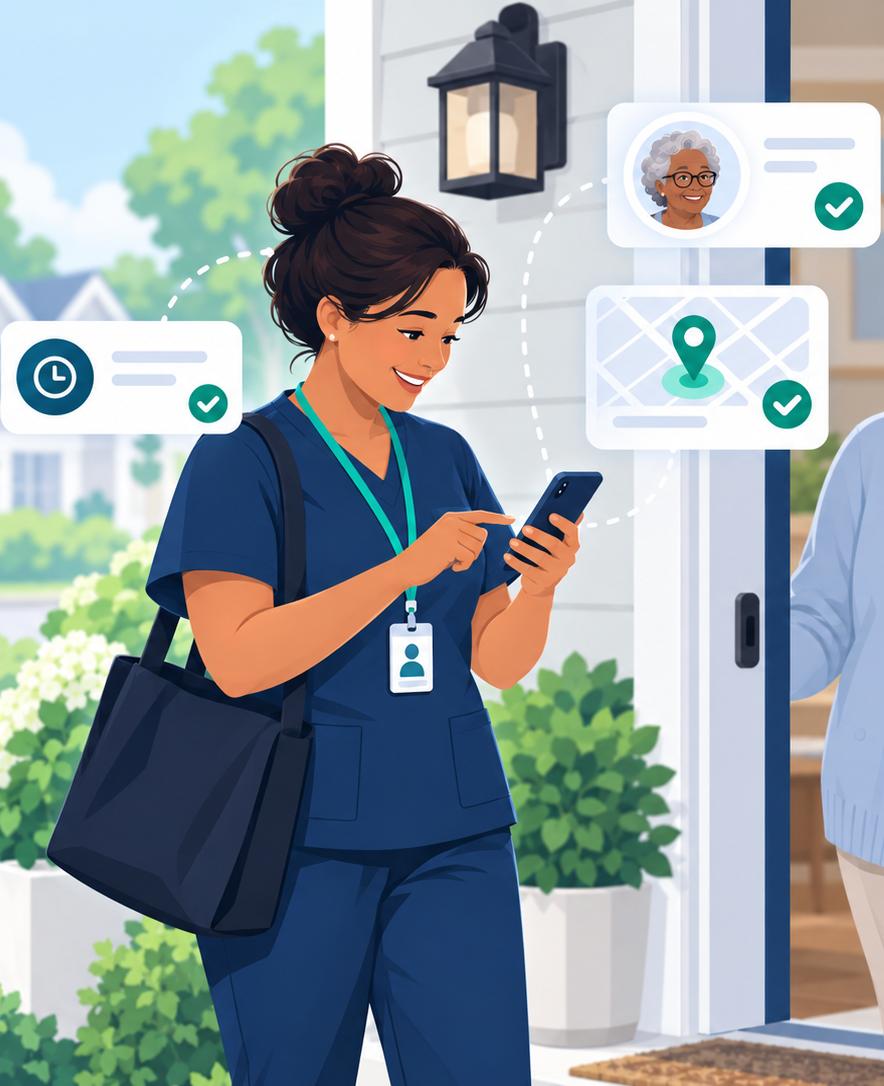
In the early days of home care, people didn’t have smart phones or ubiquitous Internet access, but a technology solution emerged. Systems were built where caregivers could make a phone call from the client’s home phone to report their arrival and departure. This technology is generally called telephony (pronounced teh – leh – fun – knee). Since the calls are made from the client’s home phone, “caller ID” can be used to verify that the caregiver is there. Telephony was the beginning of EVV and continues to be the most prevalent EVV method. Over time caregivers got smart phones and mobile apps emerged for recording arrivals and departures. These mobile apps use GPS location services to verify the location of the clock-in and clock-out.
Chapter 2: EVV Legislation
Chapter 3: What Information are you required to collect?
The required data collection for EVV (from the 21st Century Cures Act) is spelled out below, but keep reading after the list:
-
Type of service
-
Individual receiving the service
-
Date of service
-
Location where the service was delivered
-
Individual provider
-
Time the service began and ended
Chapter 4: Why is EVV discussed on a state-by-state basis?
A lot of US health care legislation and other matters are discussed on a national level, but EVV is often discussed on a state-by-state basis. The reason for this is that most government-paid home care is covered by Medicaid, which is administered by each state. As a quick background, there is a federal government organization called the Committee for Medicare and Medicaid Services (CMS). CMS oversees Medicare which is a national program providing healthcare for the elderly (65 and over) and the disabled. Medicaid provides benefits for healthcare and other social care services to the poor. As mentioned earlier, Medicaid is administered on a state by state basis.
Chapter 5: EVV Deployment Models
The regulation offered four (4) different models for the states to implement EVV. The models are described here:
-
Provider Choice:
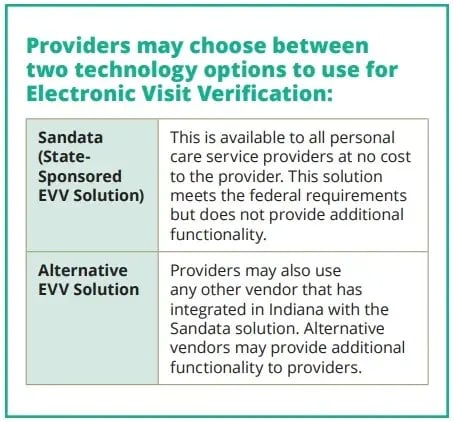
The home care agency chooses the software that they wish to use (or stay with their current vendor) but the software provider needs to submit EVV information and claims in accordance with the state’s rules. Sometimes the state offers a sponsored solution as shown below:
-
State-Mandated System:
The state chooses what system providers need to use (either a state-provided system or an external vendor) and in many cases they offer it for free to the providers.
-
Undetermined:
Chapter 6: EVV State-by-state
-
alabama EVV in Alabama
-
alaska EVV in Alaska
-
arizona EVV in Arizona
-
arkansas EVV in Arkansas
-
califirnia EVV in California
-
colorado EVV in Colorado
-
connecticut EVV in Connecticut
-
delaware EVV in Delaware
-
florida EVV in Florida
-
georgia EVV in Georgia
-
hawaii EVV in Hawaii
-
idaho EVV in Idaho
-
illinois EVV in Illinois
-
indiana EVV in Indiana
-
lowa EVV in Iowa
-
kansas EVV in Kansas
-
kentucky EVV in Kentucky
-
louisiana EVV in Louisiana
-
maine EVV in Maine
-
maryland EVV in Maryland
-
massachusetts EVV in Massachusetts
-
michigan EVV in Michigan
-
minnesota EVV in Minnesota
-
EVV in Mississippi
-
missouri EVV in Missouri
-
montana EVV in Montana
-
nebraska EVV in Nebraska
-
nevada EVV in Nevada
-
new-hampshire EVV in New Hampshire
-
new-jersey EVV in New Jersey
-
new-maxico EVV in New Mexico
-
new york EVV in New York
-
north-carolina EVV in North Carolina
-
north-dakota EVV in North Dakota
-
ohio EVV in Ohio
-
oklahoma EVV in Oklahoma
-
oregon EVV in Oregon EVV
-
pennsylvania EVV in Pennsylvania
-
rhode EVV in Rhode Island
-
south-carolina EVV in South Carolina
-
south-dakota EVV in South Dakota
-
tennessee EVV in Tennessee
-
texas EVV in Texas
-
utah EVV in Utah
-
vermont EVV in Vermont
-
virginia EVV in Virginia
-
washington EVV in Washington
-
west virginia EVV in West Virginia
-
wisconsin EVV in Wisconsin
-
wyoming EVV in Wyoming
Check out our Launch Kit to accelerate your home care business!

Chapter 7: EVV Methods for Identifying the Location of Service:

Telephony
Caregivers clock-in from the client’s home phone and verify their location via caller-ID.
Mobile App
Caregivers clock-in using a GPS enabled mobile app, and location is verified via GPS location. Learn more about EVV Mobile Apps here

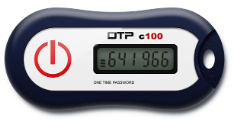
FOB
A token device is affixed in the home that provides a new code every minute. The caregiver enters the FOB code and the software looks it up to determine their arrival and departure time.
Chapter 8: Recommendations on how to approach EVV
Whereas the information above is all fact-based. The rest earns credibility based on our observations of the thousands of daily users of Ankota’s EVV software and prospects that we’re speaking to on a regular basis.
-
Get on board:
-
Telephony is not enough:
-
We don’t believe that occasional EVV errors will result in withheld payments, but habitual errors will:
-
For now you need to embrace your state’s EVV model:
EVV Software
Chapter 9: Best Practices for Occasional EVV Errors:
Hopefully, you’re all set with EVV in your agency or will get their soon. That’s great, but no agency is perfect. Here are some best practices for managing the EVV errors that your agency will experience:
-
Most Caregivers will be fine with EVV so you’ll need to focus on the others:
-
The third reason (in addition to fear of technology and fear of change) for caregivers to resist EVV is fraud:
-
Make Sure to Review Visits with Errors:
-
Train your schedulers on how to use the EVV system:
Learn More from our Blog:
-
7 Reasons Why Smart Phones are the new Telephony
-
9 Ways to Make Your Telephony Roll-Out a Success
-
Best EVV Home Care Software for Virginia
-
Helping Home Care Caregivers with EVV Connection Issues
-
What is EVV and How Does it Impact Your Home Care Business?
-
Home Care 101: Rounding Home Care Visits for Billing and Payroll
-
What is EVV and how does it impact your home care business?
-
EVV Best Practice: Maximize auto-approval
-
EVV Best Practice: Single shift time sheet
-
EVV Best Practice: Automatic Visit Screening
-
EVV Best Practice: Preparing Caregivers for EVV
-
EVV Best Practice: Getting stragglers on board with EVV
-
EVV Firestorm - Agencies and States push back on EVV
-
EVV and rounding rules
-
EVV Best Practice: Create Care Plan Task Lists from Assessments
-
EVV Best Practice: Rounding and Rollover Minutes
-
EVV Best Practice: Handing time sheets after the fact
-
EVV Best Practices (Collection)
-
Electronic Visit Verification Page
-
EVV Aggregators Explained: A Simple Guide for Home Care Providers
Free EVV eBook